Storage Tips for Seasonal Residents in the Gunnison Valley |
| STORAGE TIPS FOR SEASONAL RESIDENTS IN THE GUNNISON VALLEY
⏱ 13 min read ·
📄 #2,548 words
Essential storage strategies for Gunnison Valley seasonal residents. Learn what to store, unit sizing, climate control needs, and local preparation tips.
|
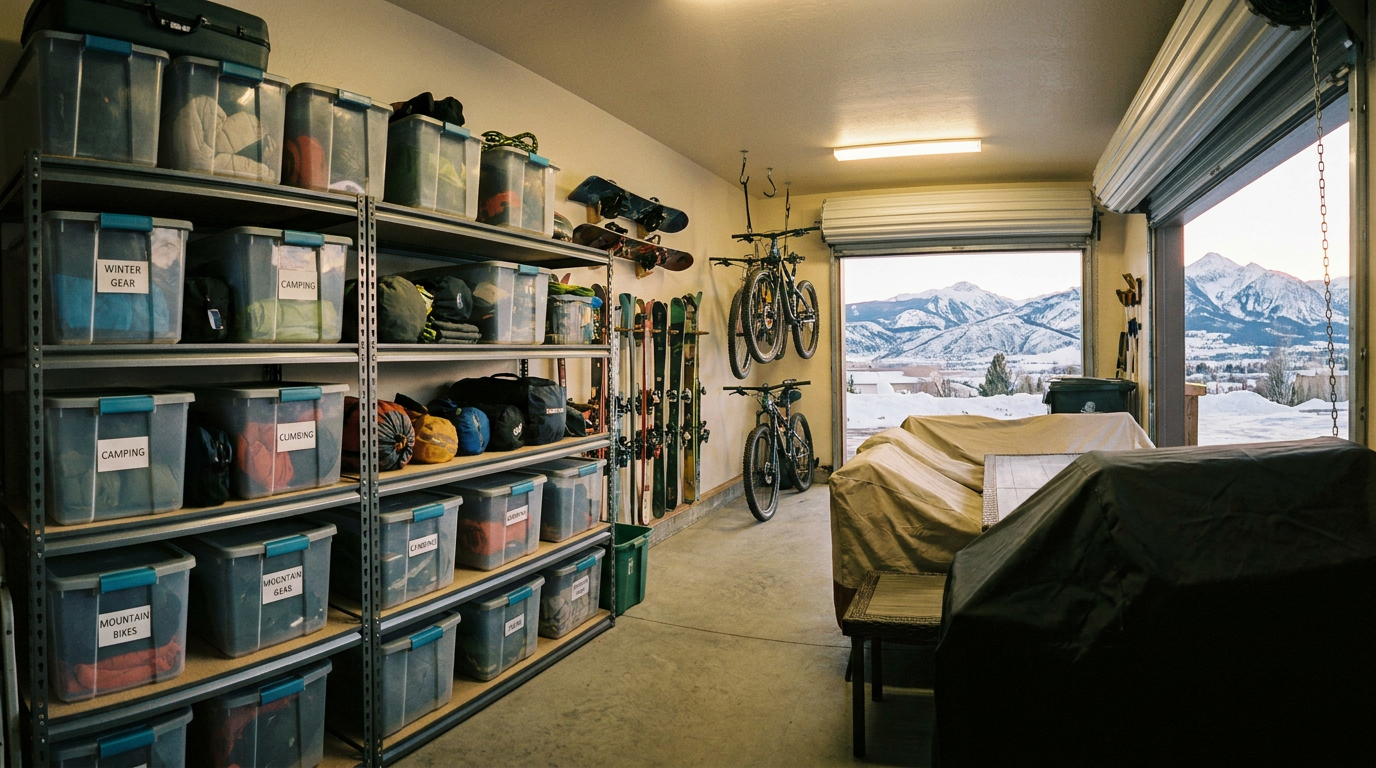
S easonal residents in the Gunnison Valley need heated storage units sized between 5x10 and 10x25 feet, depending on whether they store household items, vehicles, or outdoor gear. Climate control is essential here because winter temperatures regularly drop to negative 20 degrees Fahrenheit, and summer humidity during monsoon season can damage electronics, wooden furniture, and leather goods left in standard units.
| Key Points: | |
|---|---|
| • | Gunnison Valley winters reach negative 20 degrees Fahrenheit; heated units prevent freeze damage to electronics, liquids, and wood furniture |
| • | Most seasonal residents need 10x10 to 10x20 units, costing $337 to $693 per month for climate-controlled space |
| • | Prepare items 2 to 3 weeks before departure: clean thoroughly, drain all liquids, and use moisture absorbers |
| • | Vehicle and RV storage requires drive-up units with minimum 10x21 dimensions and battery disconnect procedures |
| • | Month-to-month leasing offers flexibility for unpredictable seasonal schedules without long-term commitments |
Why Gunnison Valley Storage Differs from Other Mountain Communities
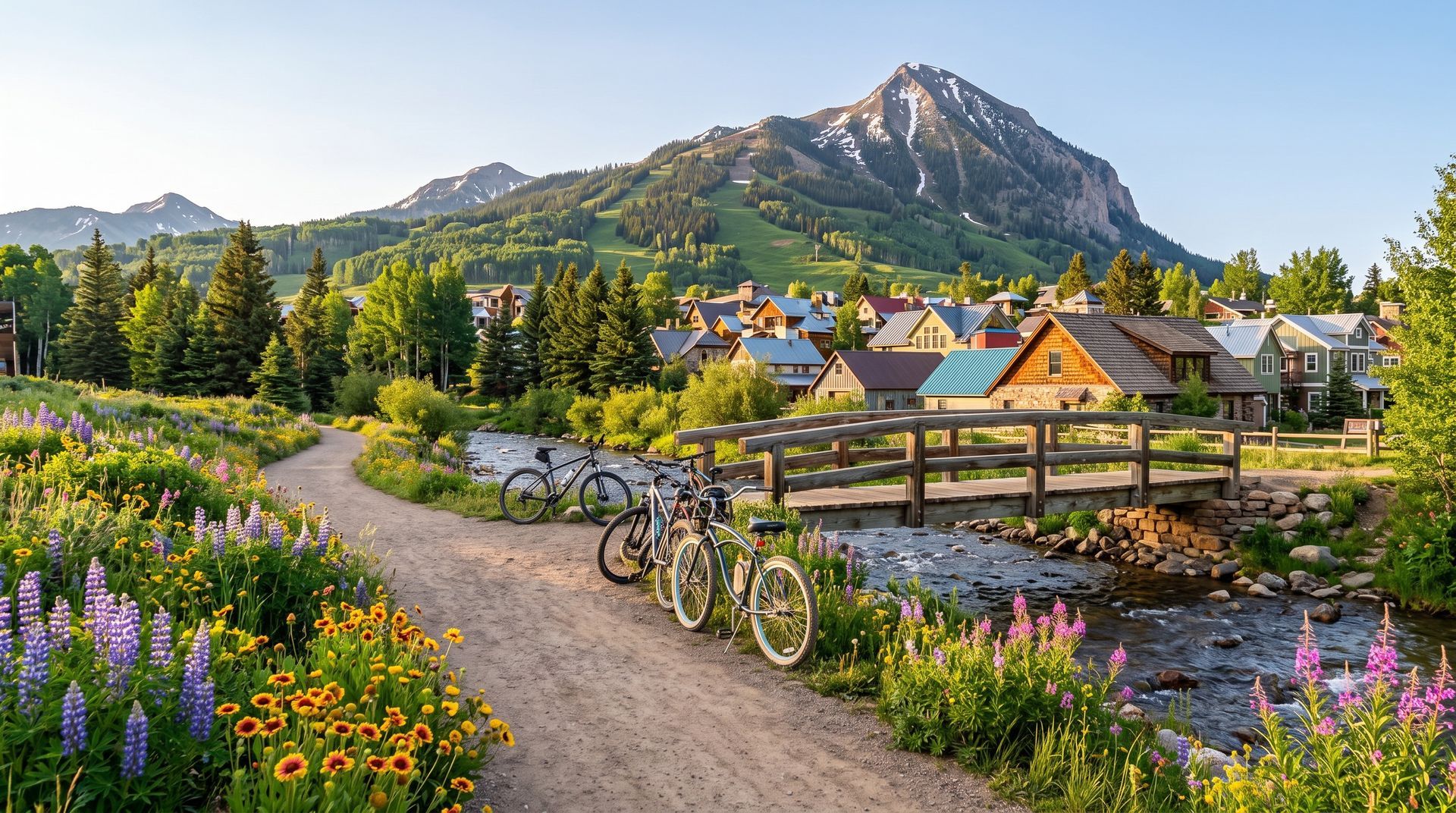
The Gunnison Valley presents unique storage challenges that set it apart from other Colorado mountain towns. According to the Gunnison County Guide to Rural Living published by Colorado State University Extension, the valley floor sits at 7,700 feet elevation with temperature inversions that trap cold air, creating some of the coldest recorded temperatures in the continental United States.
Crested Butte and the surrounding communities experience an average of 200 inches of snowfall annually. This extended winter season, typically lasting from October through May, means seasonal residents leave belongings unattended for 6 to 8 months. Standard storage units without climate control expose items to freeze-thaw cycles that crack plastics, warp wood, and corrode metal components.
The summer monsoon season from July through September brings afternoon thunderstorms and humidity spikes. Items stored in non-climate-controlled units during this period face mold and mildew risks, particularly fabrics, leather goods, and paper documents. A heated storage unit maintains temperatures between 55 and 80 degrees Fahrenheit year-round, eliminating both freeze damage and humidity problems.
Choosing the Right Storage Unit Size for Seasonal Needs
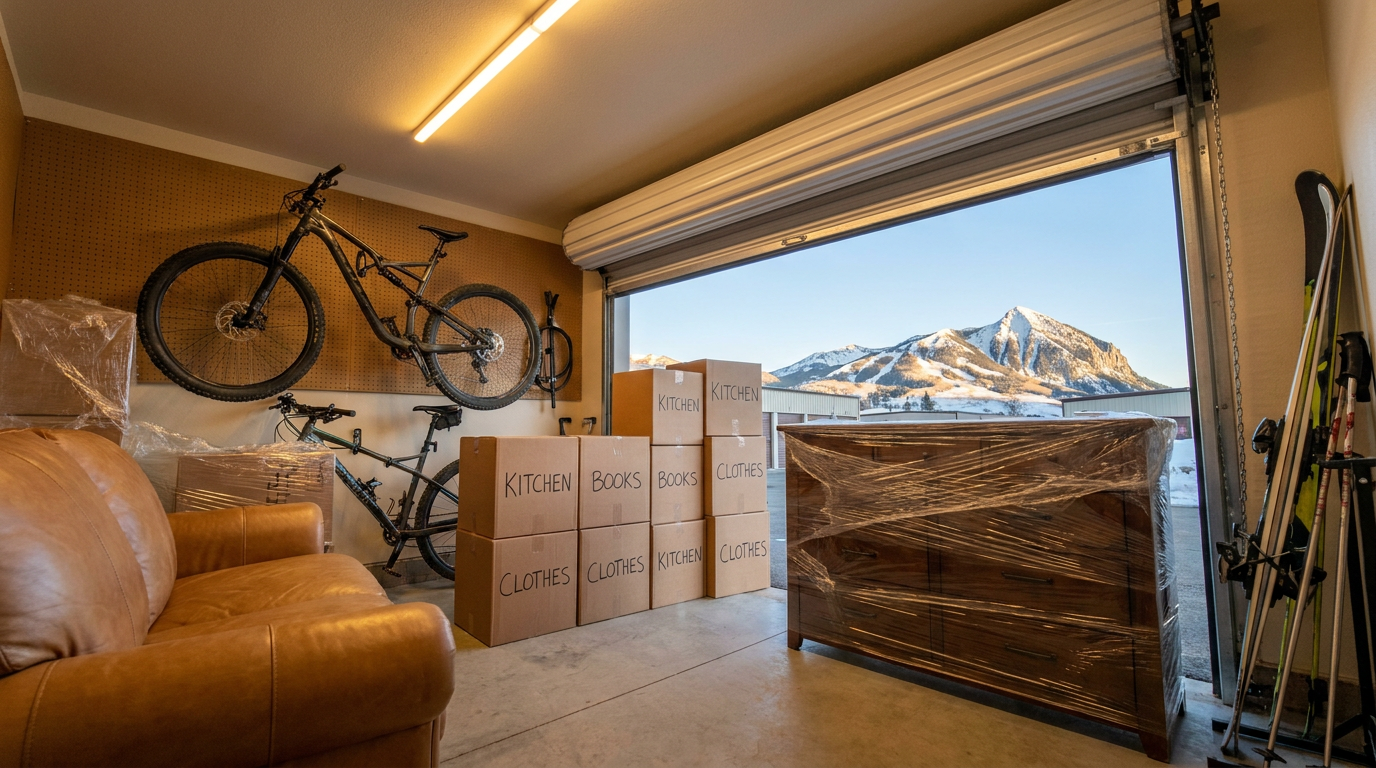
Seasonal residents typically underestimate their storage needs by 20 to 30 percent. The contents of a furnished vacation rental or second home require more space than identical items in a primary residence because seasonal items like ski equipment, mountain bikes, and outdoor furniture add significant volume.
| Unit Size | Best For | Typical Contents | Monthly Cost |
|---|---|---|---|
| 6x10 | Seasonal gear only | Skis, bikes, boxes, small furniture | $244 |
| 10x10 | Studio or 1-bedroom condo | Bed, couch, kitchen items, seasonal gear | $337 to $349 |
| 10x21 | 2-bedroom home or vehicle | Full household plus SUV or small boat | $693 |
| 10x25 | Large home or RV | 3+ bedroom contents, RV, boat with trailer | $813 |
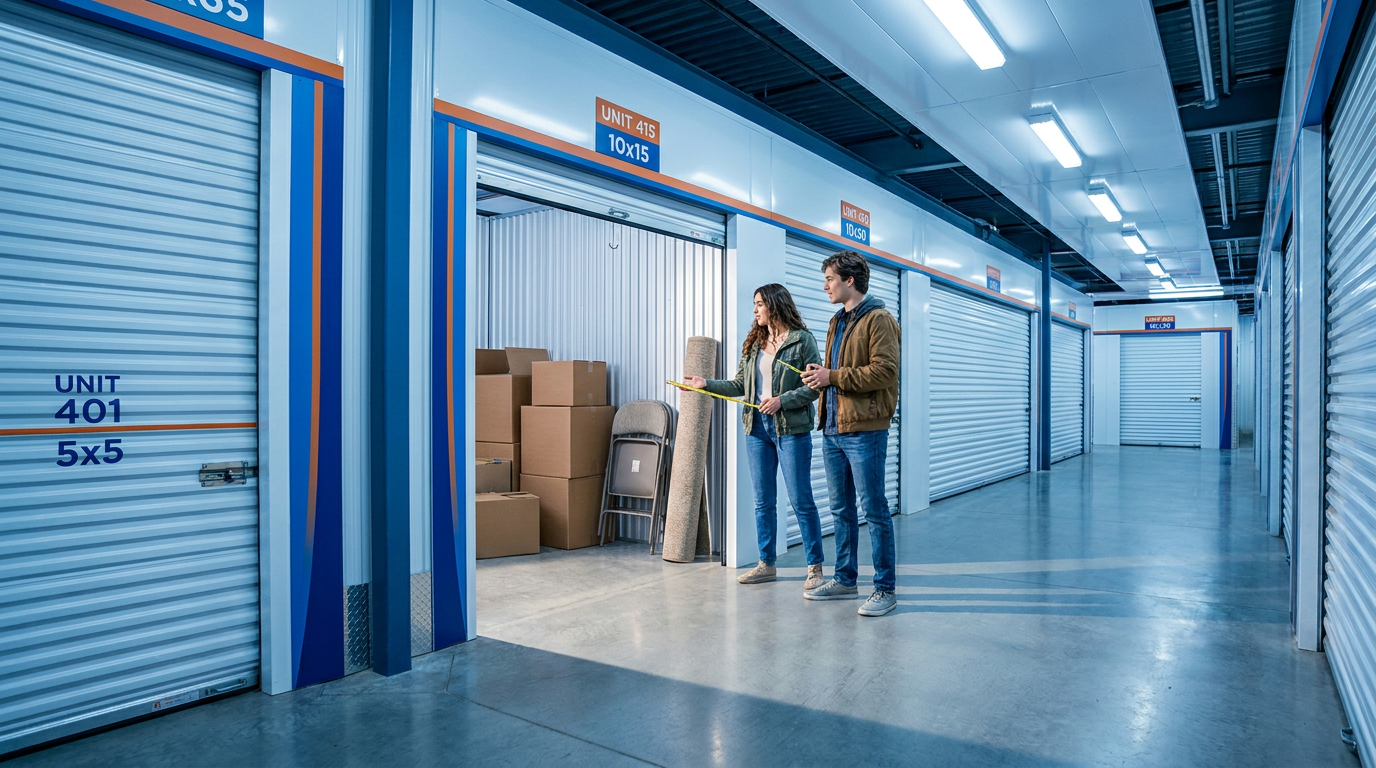
Not sure how much space you need? The storage unit size guide provides detailed comparisons with visual references for each dimension. Ground floor units cost slightly more but eliminate the need to carry heavy items upstairs, a significant consideration for bulky ski equipment or furniture.
What Seasonal Residents Should Never Store in Unheated Units
The temperature extremes in Gunnison County create specific risks for common household items. Electronics containing LCD screens, batteries, or circuit boards suffer permanent damage when exposed to temperatures below 32 degrees Fahrenheit. Laptop computers, televisions, gaming consoles, and smart home devices should only go into climate-controlled storage.
Wooden furniture, particularly antiques or pieces with veneer finishes, crack and split during freeze-thaw cycles. The moisture in wood expands when frozen, creating internal stress fractures that appear as surface cracks months later. Leather furniture, handbags, and clothing become brittle and develop permanent creases in cold storage.
Liquids of any kind pose problems in unheated storage. Canned goods, wine bottles, cleaning supplies, and personal care products can freeze, expand, and rupture containers. Even items that appear intact after freezing may have compromised seals or altered chemical compositions. Remove all liquids before storing or choose a heated unit.
Items That Require Climate Control in the Gunnison Valley
- Electronics: Computers, televisions, stereo equipment, cameras
- Musical instruments: Guitars, pianos, wind instruments with pads
- Artwork and photographs: Framed pieces, photo albums, negatives
- Documents: Important papers, books, vinyl records
- Wooden furniture: Antiques, veneer pieces, items with inlays
- Leather goods: Furniture, clothing, accessories
- Appliances: Refrigerators, washers, dryers with electronic controls
- Wine and beverages: Any liquid that can freeze and expand
Preparing Your Belongings for Extended Storage
Start preparation 2 to 3 weeks before your departure date. This timeline allows for thorough cleaning, proper drying of items, and organized packing. Rushing the process leads to mold growth from residual moisture and pest infestations from food residue.
Clean every item before storage. Wash all fabrics, including bedding, curtains, and clothing. Vacuum upholstered furniture and apply fabric protector. Wipe down hard surfaces with appropriate cleaners and allow 24 to 48 hours for complete drying. Moisture trapped in cushions or behind furniture backs creates mold colonies within weeks.
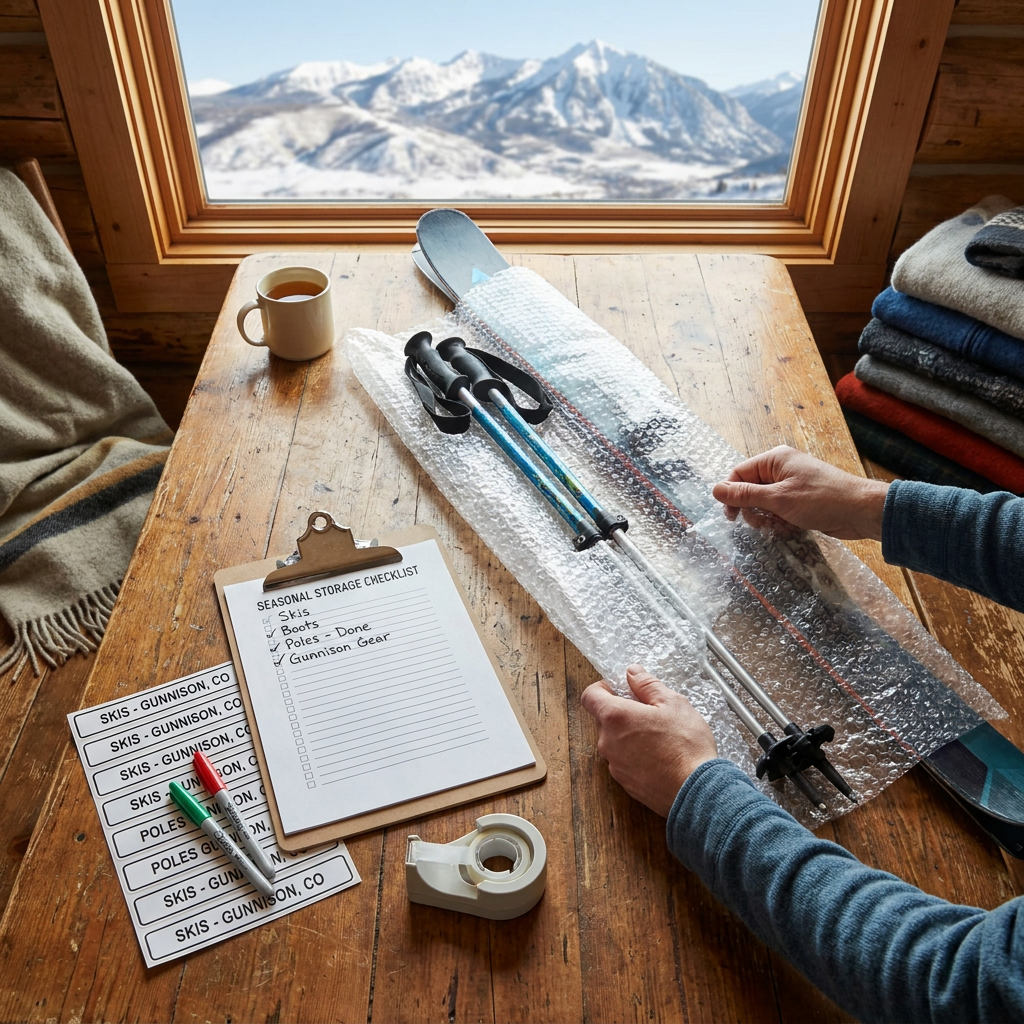
Disassemble furniture when possible to maximize space and prevent stress on joints during long-term storage. Remove legs from tables, take beds apart, and detach shelves from bookcases. Wrap each component in moving blankets or bubble wrap, and keep hardware in labeled plastic bags taped to the corresponding furniture piece.
Packing Materials and Organization
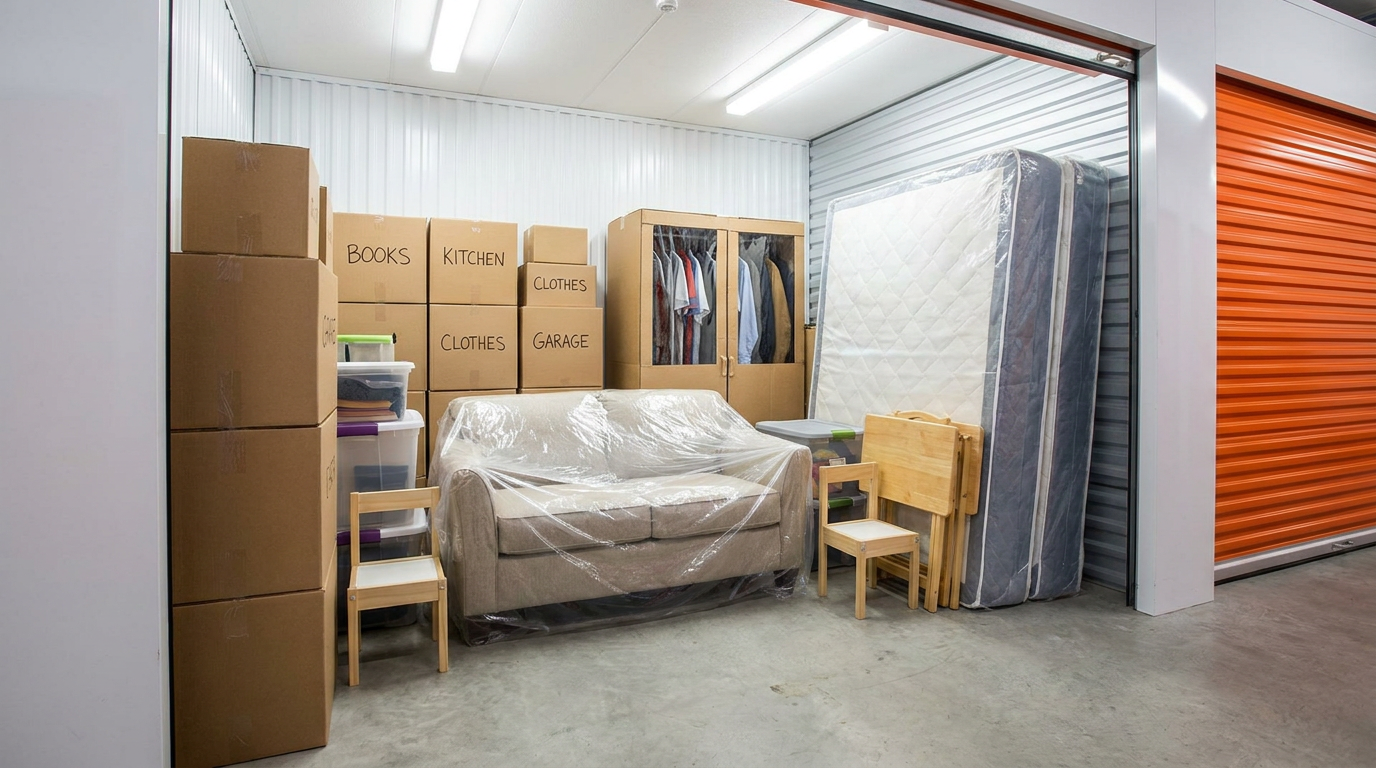
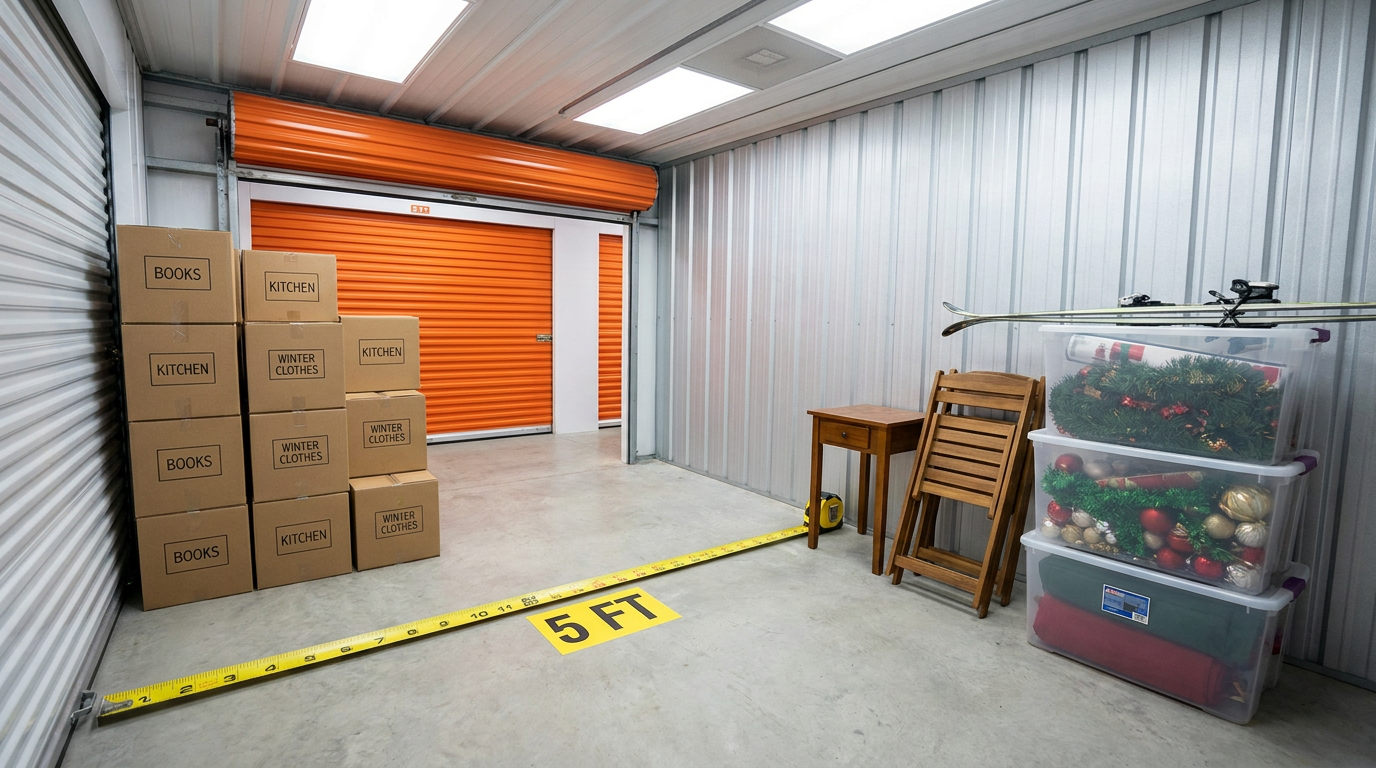
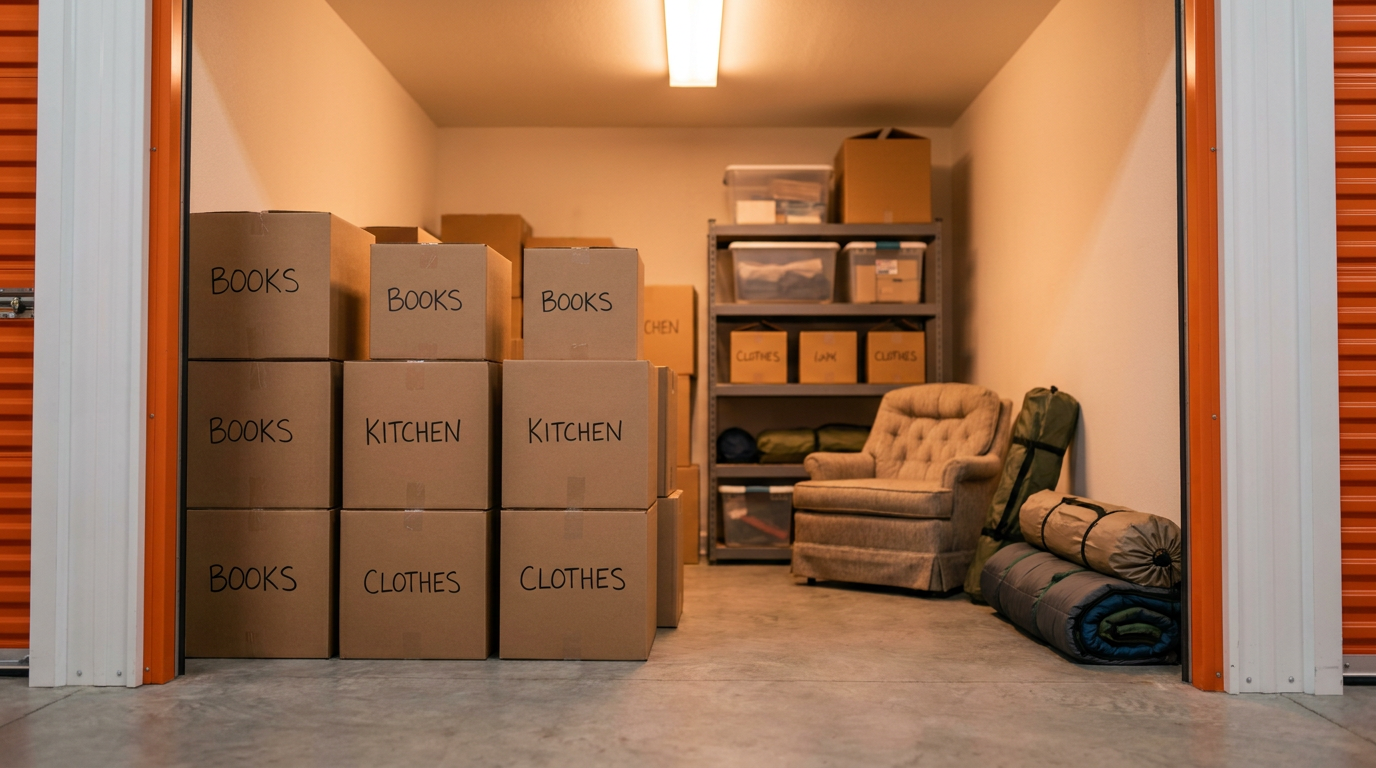
Use uniform box sizes when possible. Standard moving boxes stack efficiently and reduce wasted space. Place heavier items in smaller boxes to keep weight manageable, and fill any gaps with packing paper or bubble wrap to prevent shifting. Label all boxes on multiple sides with contents and room destination.
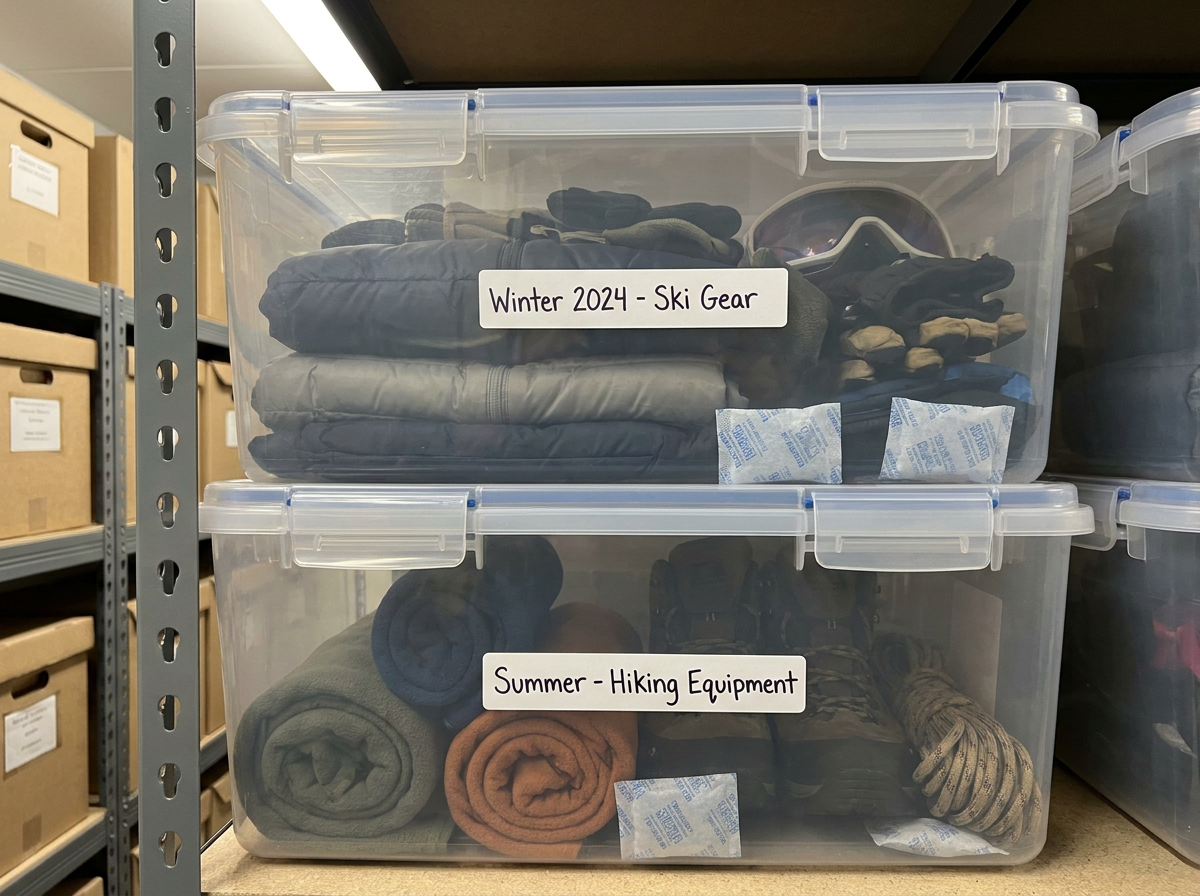
Invest in quality plastic storage bins for items you access seasonally. Clear bins allow visual identification without opening, and their uniform dimensions stack neatly. Reserve cardboard boxes for items that will remain untouched during your absence.
Create an inventory list with box numbers and contents. Store one copy in the unit, keep one at your primary residence, and save a digital copy in cloud storage. This documentation proves invaluable for insurance claims and helps locate specific items without unpacking everything.
Vehicle and RV Storage for Seasonal Residents
Many Gunnison Valley seasonal residents keep vehicles, RVs, boats, or trailers at their mountain property. Proper storage preparation prevents costly repairs and extends vehicle lifespan. According to Carefree of Colorado's RV storage guide, thorough preparation before storage eliminates 90 percent of common spring startup problems.
Change oil and filter before storage. Used oil contains acids and contaminants that corrode engine components during extended sitting. Fresh oil protects internal surfaces throughout the storage period. Add fuel stabilizer to a full tank, as partial tanks allow condensation that introduces water into the fuel system.
Disconnect batteries or use a battery maintainer. Cold temperatures accelerate battery discharge, and a fully dead battery may not recover. Remove batteries entirely for storage longer than 3 months, or connect a smart maintainer that cycles charging as needed. Store removed batteries in a climate-controlled space.
RV-Specific Preparation Steps
Drain all water systems completely, including fresh water tanks, water heaters, and holding tanks. Add RV antifreeze to all drains and the toilet bowl. Even heated storage units can experience brief temperature drops during power outages, and frozen pipes cause expensive damage.
Clean the interior thoroughly and leave cabinet doors open for airflow. Place containers of baking soda or activated charcoal throughout the living space to absorb odors and moisture. Cover all external vents with breathable mesh to prevent rodent entry while maintaining air circulation.
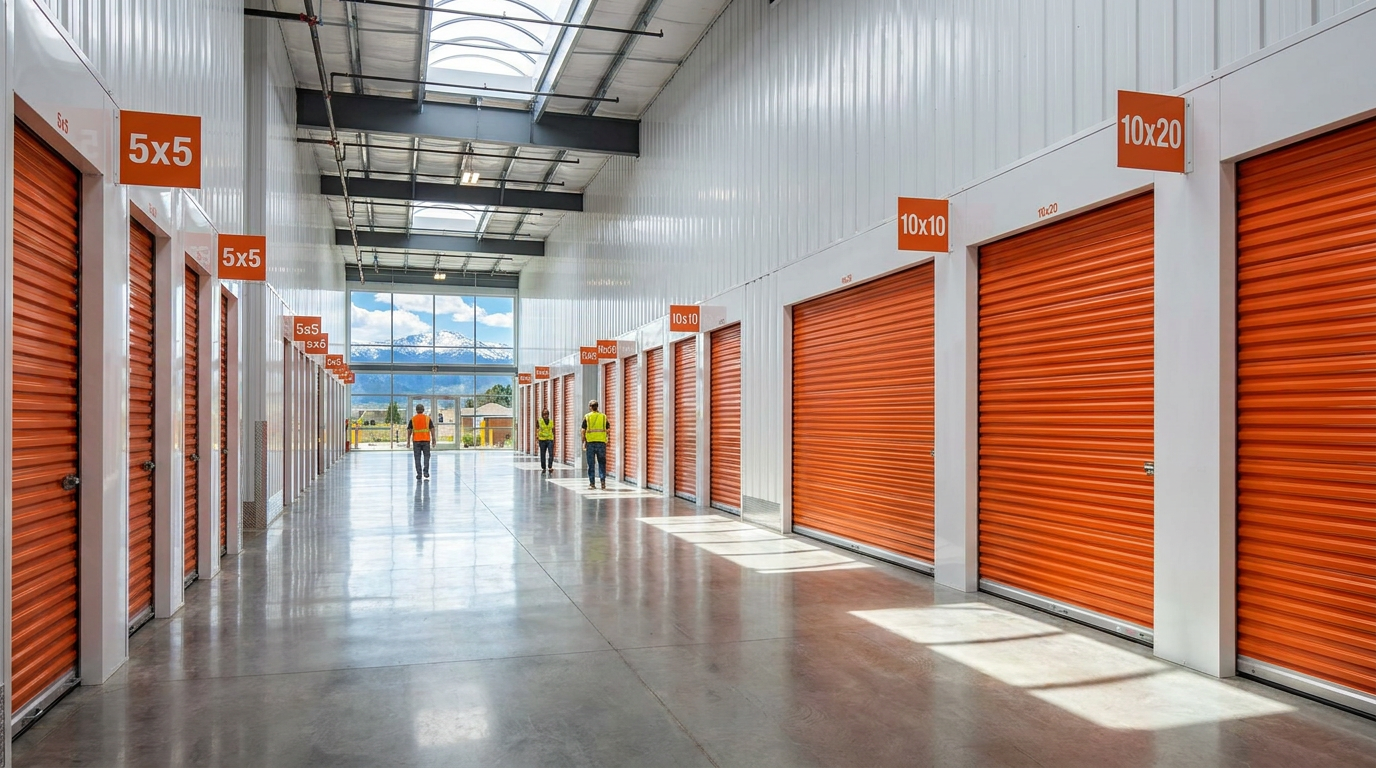
The 10x25 drive-up units accommodate most RVs and travel trailers, while the 30x25 commercial units handle larger Class A motorhomes and fifth wheels. Drive-up access eliminates the need to maneuver through narrow hallways or around corners, making seasonal retrieval straightforward.
Outdoor Gear Storage Strategies
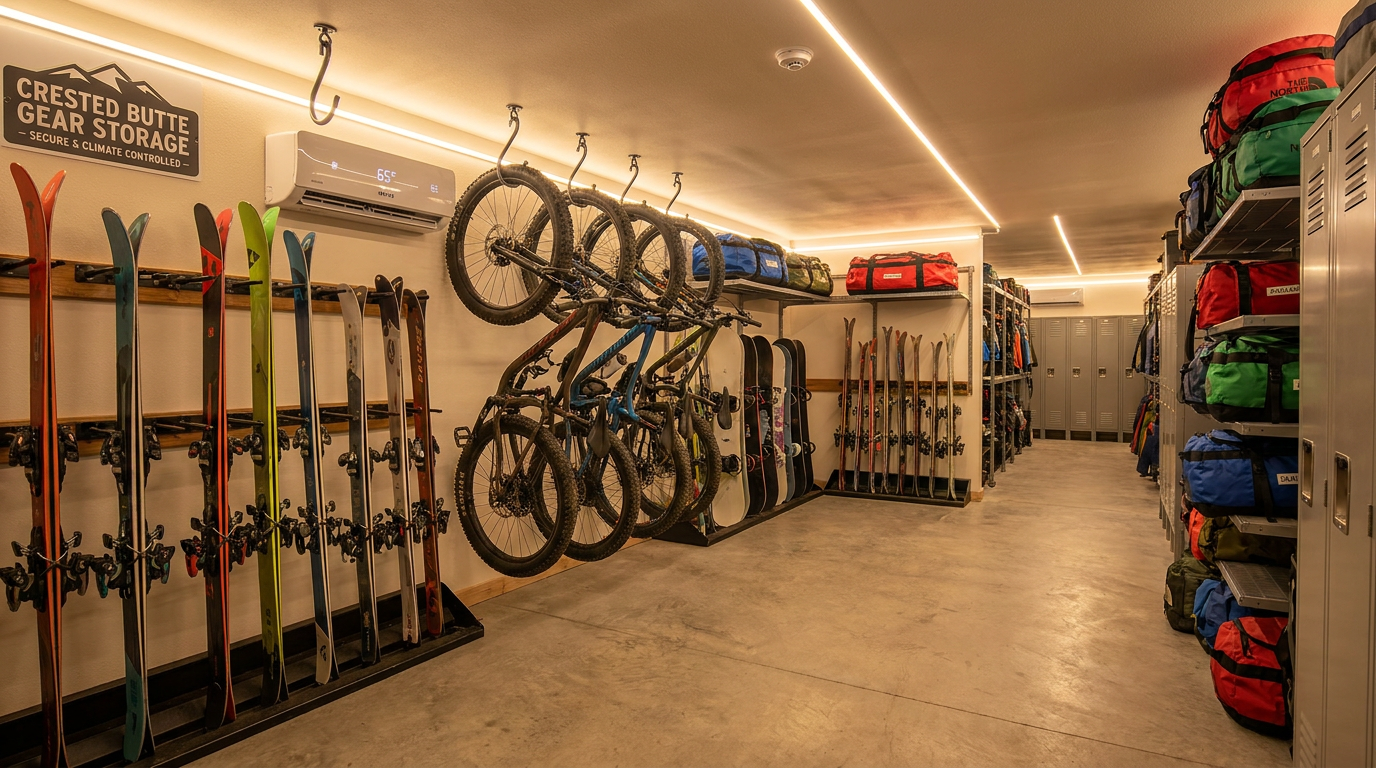
Crested Butte's reputation as a world-class ski and mountain bike destination means seasonal residents accumulate significant outdoor equipment. Proper storage extends the life of expensive gear and ensures it performs correctly when you return.
Ski equipment requires specific preparation. Clean and dry skis thoroughly, then apply storage wax to the bases. Loosen binding DIN settings to reduce spring tension during storage. Store skis vertically or horizontally on padded surfaces, never leaning at angles that stress the camber.
Mountain bikes need degreasing, lubrication, and tire pressure reduction before storage. Lower tire pressure to 20 to 30 PSI to prevent flat spots and reduce stress on sidewalls. Hang bikes by the frame, not the wheels, to prevent rim damage. Apply frame protector and cover with breathable fabric.
Fishing gear, camping equipment, and water sports items all benefit from thorough cleaning and complete drying. Neoprene wetsuits and waders should hang on wide hangers to prevent creasing. Sleeping bags store best uncompressed in large breathable bags rather than stuff sacks.
Security Considerations for Extended Absence
Seasonal residents face unique security concerns because their belongings remain unattended for months. Modern storage facilities address these risks through multiple security layers, but understanding available protections helps you choose appropriately.
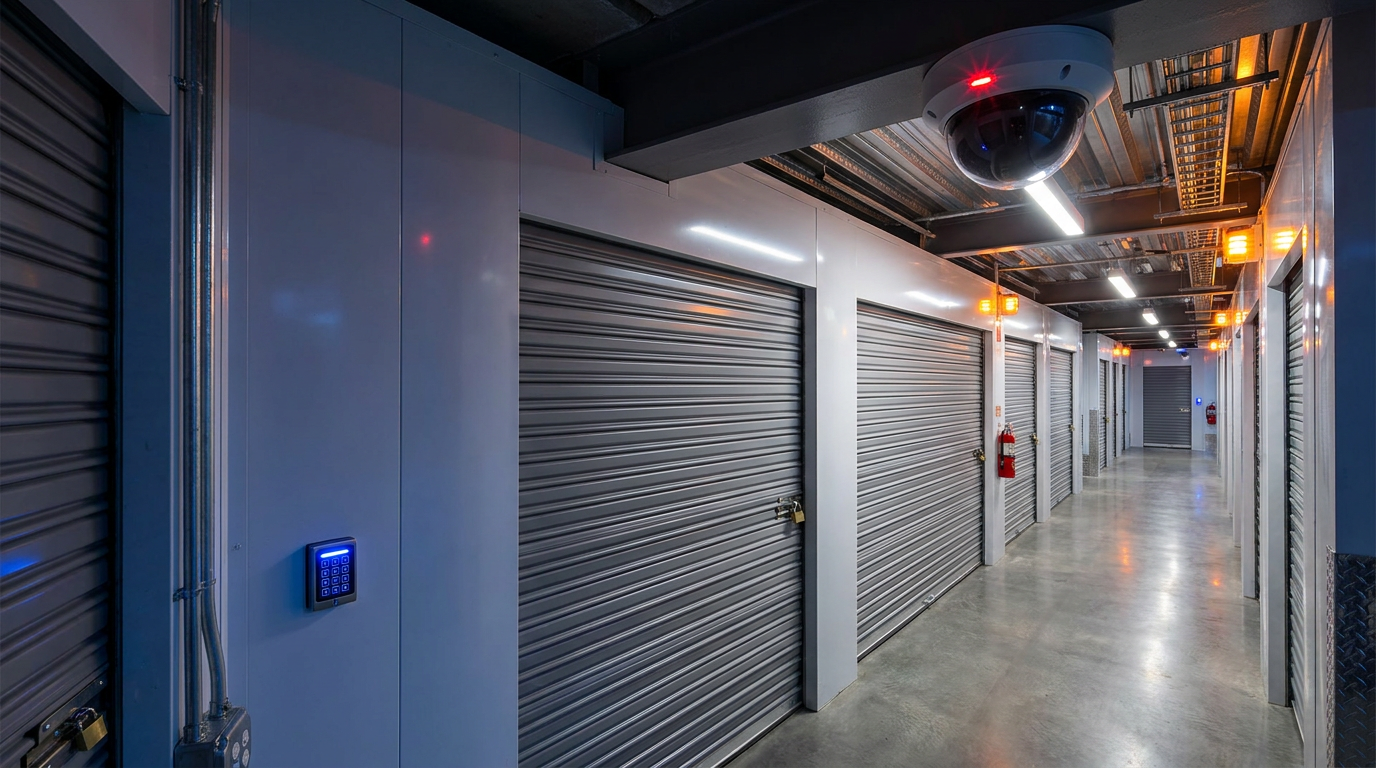
Digital video surveillance provides continuous monitoring and recorded evidence if incidents occur. LED lighting throughout the facility eliminates dark areas where unauthorized activity might go unnoticed. Individual unit alarms alert management to any unauthorized access attempts.
Access control systems track every entry and exit with date, time, and user identification. This audit trail proves valuable for insurance claims and provides accountability for all facility access. 24/7 access availability means you can check on belongings at any time, even during unexpected visits to the valley.
Consider a tenant protection plan for additional peace of mind. These plans cover burglary, fire, water damage, and other risks that standard homeowner or renter policies may exclude for items in off-site storage. Review coverage limits and exclusions before selecting a protection level.
Month-to-Month Flexibility for Unpredictable Schedules
Seasonal residency in the Gunnison Valley rarely follows a predictable calendar. Early snowfall might extend your fall visit, while a late spring could delay your summer arrival. Month-to-month leasing accommodates these schedule variations without financial penalties.
Long-term contracts lock you into payments regardless of actual use. If you decide to sell your Crested Butte property or change your seasonal patterns, breaking a lease involves fees and complications. Month-to-month arrangements allow you to adjust storage needs as circumstances change.
No deposit requirements reduce upfront costs and simplify the rental process. Online account management enables payment and communication from anywhere, eliminating the need to coordinate with facility staff across time zones. Automatic payment options prevent missed payments during extended absences.
Common Mistakes Seasonal Residents Make
Experience with Gunnison Valley seasonal residents reveals consistent patterns of storage mistakes. Avoiding these errors saves money, prevents damage, and reduces stress during seasonal transitions.
Underestimating unit size: Cramming items into too-small units prevents proper air circulation, makes access difficult, and increases damage from items pressing against each other. Choose one size larger than you think necessary.
Skipping climate control: The cost difference between standard and heated storage seems significant until you replace a damaged laptop, refinish warped furniture, or discover mold throughout your belongings. Climate control costs less than one major repair.
Storing prohibited items: Propane tanks, gasoline containers, fireworks, and other hazardous materials violate storage agreements and create safety risks. Review prohibited items lists before packing. Check the frequently asked questions for complete details on storage restrictions.
Forgetting about pests: Rodents seek shelter in storage units, especially during harsh winters. Never store food, pet food, or items with food residue. Use plastic bins rather than cardboard boxes, which rodents can chew through easily.
Neglecting insurance: Standard homeowner policies often exclude or limit coverage for items in off-site storage. Verify your coverage and supplement with tenant protection if necessary.
Timing Your Storage Rental
Storage demand in the Gunnison Valley follows predictable seasonal patterns. Understanding these cycles helps you secure preferred unit sizes and potentially negotiate better rates.
Peak demand occurs in late April through early June as winter seasonal residents depart and summer residents have not yet arrived. Another peak happens in September and October as summer residents leave before ski season begins. Reserving units 2 to 4 weeks before these periods ensures availability.
The slowest periods fall in mid-winter (January through March) and mid-summer (July through August) when most seasonal residents are actively using their properties. Starting a rental during these periods may offer more unit selection and flexibility.
Local Considerations Unique to Crested Butte
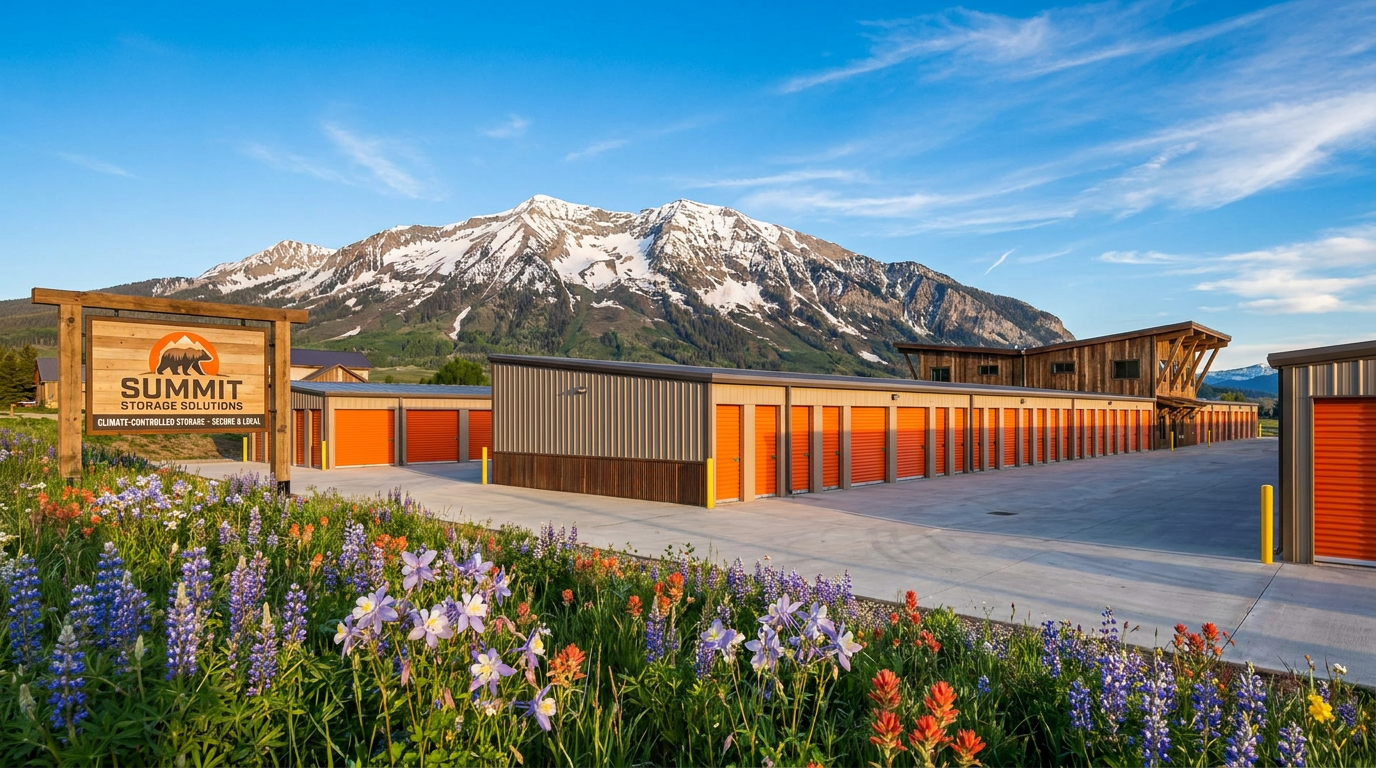
Crested Butte's location 5 minutes from Highway 135 makes storage access convenient whether you approach from Gunnison, Almont, or Gothic. The Riverland Drive location sits at the valley floor, avoiding the steeper grades and winter road conditions of Mt. Crested Butte.
Local ownership means the facility understands seasonal resident needs. Staff members live in the community year-round and can address issues promptly, unlike corporate chains managed from distant headquarters. This locally owned and operated approach provides personalized service and community accountability.
The facility serves the entire Gunnison Valley, including residents of Almont, Gothic, and surrounding areas. Whether you own a condo at Mt. Crested Butte, a cabin near Almont, or a home in town, centralized storage simplifies your seasonal logistics.
Frequently Asked Questions
What should I never store in my garage during winter?
Avoid storing electronics, liquid-containing items, wooden furniture, leather goods, and anything temperature-sensitive in an unheated garage during Gunnison Valley winters. Temperatures reaching negative 20 degrees Fahrenheit cause irreversible damage to these items. Canned goods, wine, cleaning supplies, and personal care products can freeze and rupture. Paint, adhesives, and automotive fluids may separate or lose effectiveness after freezing.
What is the best storage container for seasonal clothes?
Clear plastic bins with tight-fitting lids work best for seasonal clothing storage. They protect against moisture, pests, and dust while allowing visual identification of contents. Avoid vacuum storage bags for natural fibers like wool and down, as compression damages loft and insulation properties. Use cedar blocks or lavender sachets for natural pest deterrence, and ensure all items are completely clean and dry before sealing containers.
Can you sleep overnight in a storage facility?
No, sleeping in storage units is prohibited at all facilities and violates rental agreements. Storage units lack ventilation, plumbing, and safety features required for habitation. Attempting to live in a storage unit creates fire hazards, health risks, and legal consequences including immediate eviction and potential criminal charges. Units are designed exclusively for belongings, not people or animals.
Do people tarp their campers for winter storage outdoors?
Tarping campers and RVs for outdoor winter storage is common but requires proper technique. Use breathable, UV-resistant covers designed for RVs rather than standard tarps, which trap moisture and cause mold. Ensure adequate ventilation beneath the cover, and check periodically for snow accumulation that can stress the roof structure. Indoor storage in climate-controlled units provides superior protection and eliminates cover-related maintenance.
Planning Your Seasonal Storage
Successful seasonal storage in the Gunnison Valley requires understanding local climate challenges, choosing appropriate unit sizes and features, and preparing belongings properly. The investment in heated storage and thorough preparation protects valuable possessions and ensures stress-free seasonal transitions.
Start planning 4 to 6 weeks before your departure date. This timeline allows for unit reservation, gathering packing materials, cleaning and preparing items, and organized packing without rushing. Contact our team to discuss your specific needs and reserve the right unit for your belongings.
|