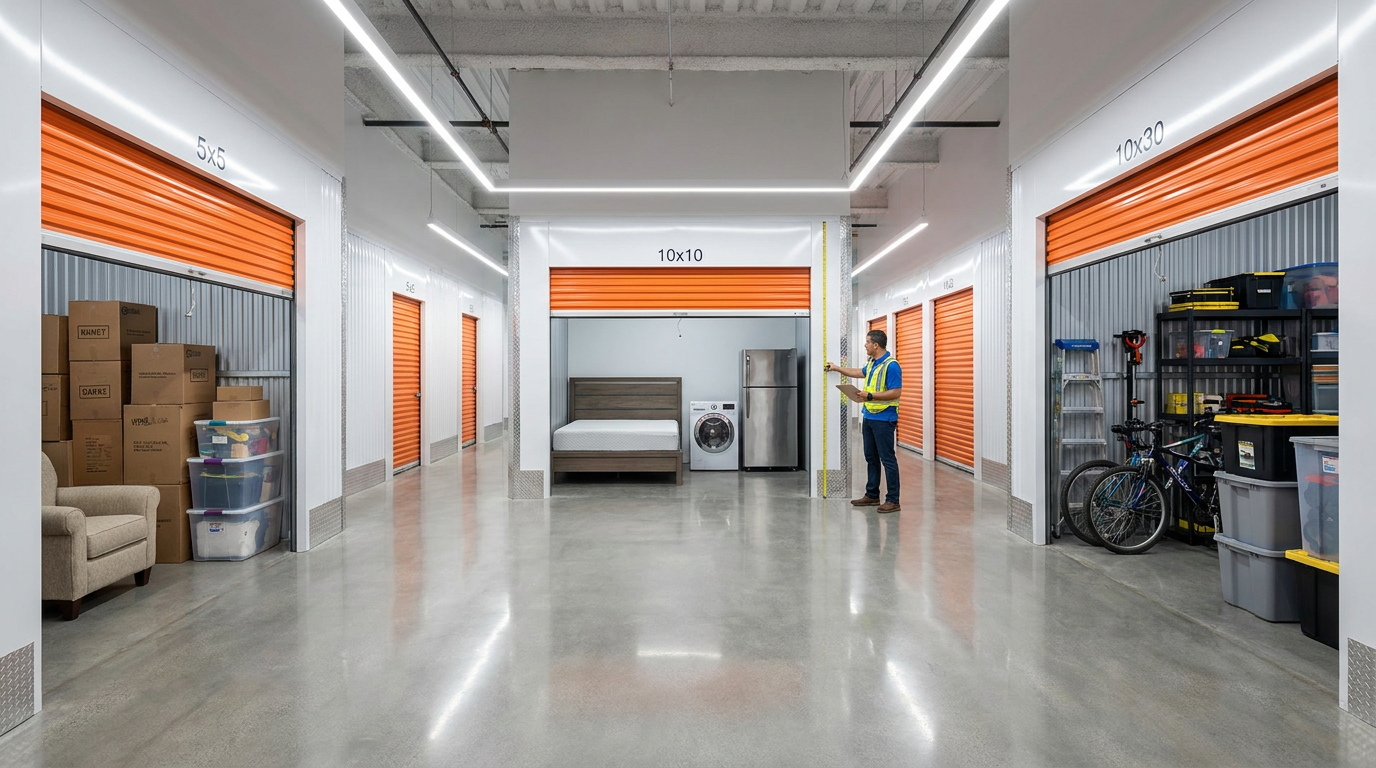
What Size Storage Unit Do I Need? Complete Size Guide 2026 |
| WHAT SIZE STORAGE UNIT DO I NEED
⏱ 14 min read ·
📄 #2,800 words
Find the right storage unit size for your needs. Compare 5x5 to 10x30 units, see what fits in each, and get expert tips for Crested Butte mountain storage.
|
T he storage unit size you need depends on your inventory: a 5x5 holds seasonal gear and 6 to 8 boxes, a 5x10 fits a studio apartment, a 10x10 accommodates a one-bedroom home, and a 10x20 stores a three-bedroom house. Most renters choose a 5x10 or 10x10 unit, which covers 80% of residential storage needs according to the Self Storage Association.
| Key Points: | |
|---|---|
| • | 5x5 units (25 sq ft) hold seasonal items, ski gear, and 6 to 8 boxes for $79 to $150 per month |
| • | 10x10 units (100 sq ft) fit a full one-bedroom apartment including furniture and appliances |
| • | Climate-controlled units maintain 55 to 80 degrees F, essential for electronics and wood furniture in mountain climates |
| • | Add 20 to 30% extra space if you need regular access to your belongings |
| • | Drive-up units save 15 to 30 minutes per visit compared to interior hallway units |
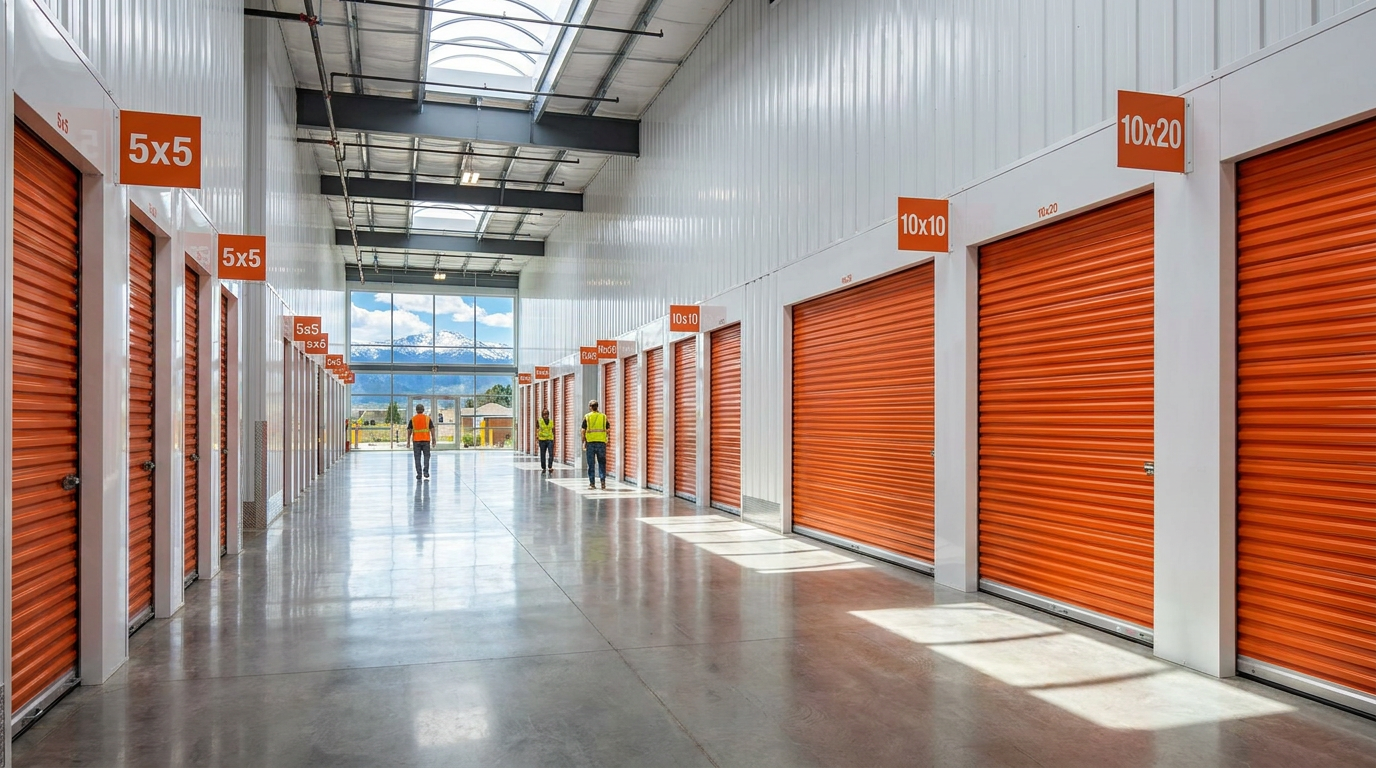
Storage Unit Size Chart: Quick Reference Guide
This comparison table shows standard storage unit dimensions, capacity, and typical uses. Unit heights range from 8 to 10 feet, giving you significant vertical stacking space that most renters underutilize.
| Unit Size | Square Feet | Comparable To | Best For |
|---|---|---|---|
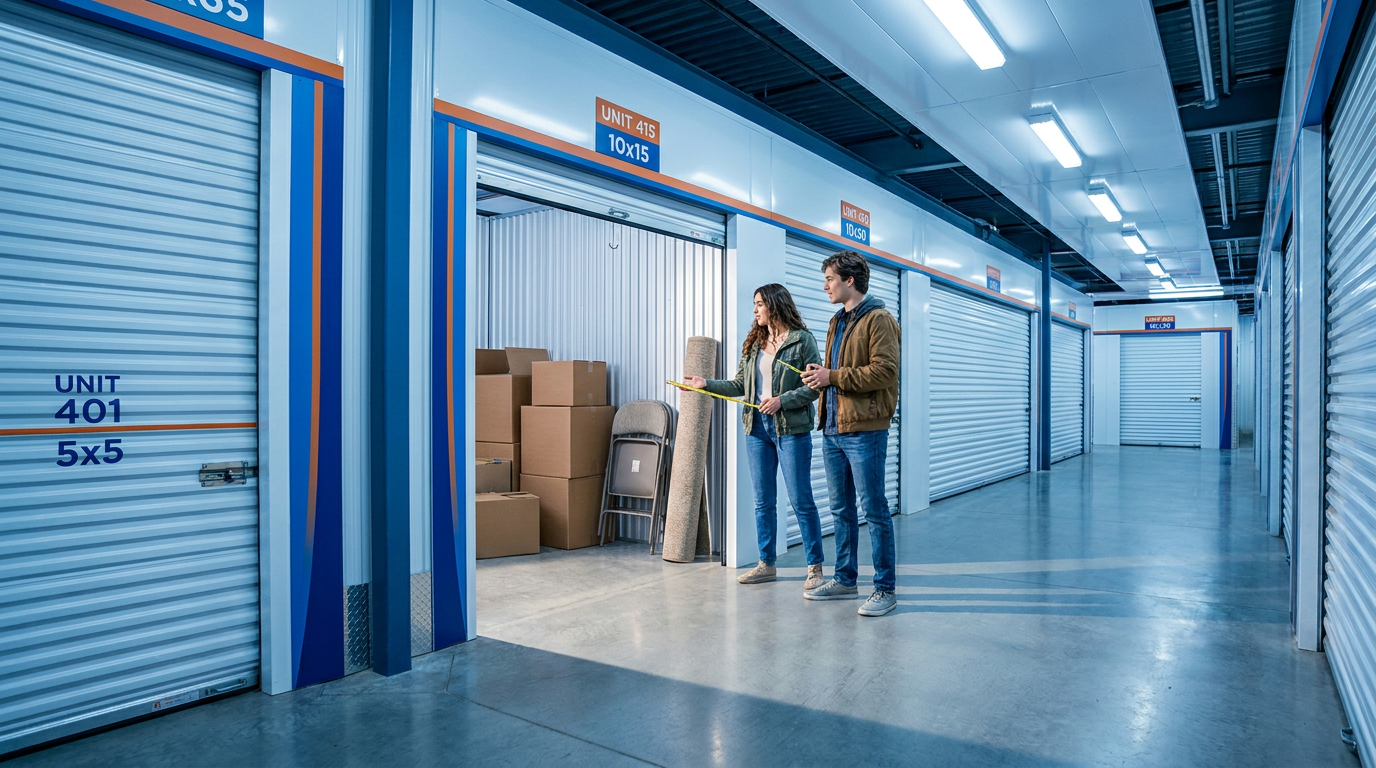
| 5x5 | 25 sq ft | Small closet | Seasonal gear, 6 to 8 boxes, small furniture |
| 5x10 | 50 sq ft | Walk-in closet | Studio apartment, mattress, dresser, 10 to 15 boxes |
| 10x10 | 100 sq ft | Half a one-car garage | One-bedroom apartment, sofa, dining set, 20 to 50 boxes |
| 10x15 | 150 sq ft | Large bedroom | Two-bedroom home, appliances, multiple mattresses |
| 10x20 | 200 sq ft | One-car garage | Three-bedroom home, vehicle, business inventory |
| 10x25 | 250 sq ft | Large garage | Four-bedroom home, RV, boat, commercial storage |
| 10x30 | 300 sq ft | Two-car garage | Large home plus garage contents, multiple vehicles |
According to Extra Space Storage research, the 10x10 unit remains the most popular size nationally, accounting for 38% of all rentals. However, mountain communities like Crested Butte show higher demand for larger units due to outdoor recreation equipment storage needs.
How Big Is a 10x10 Storage Unit?
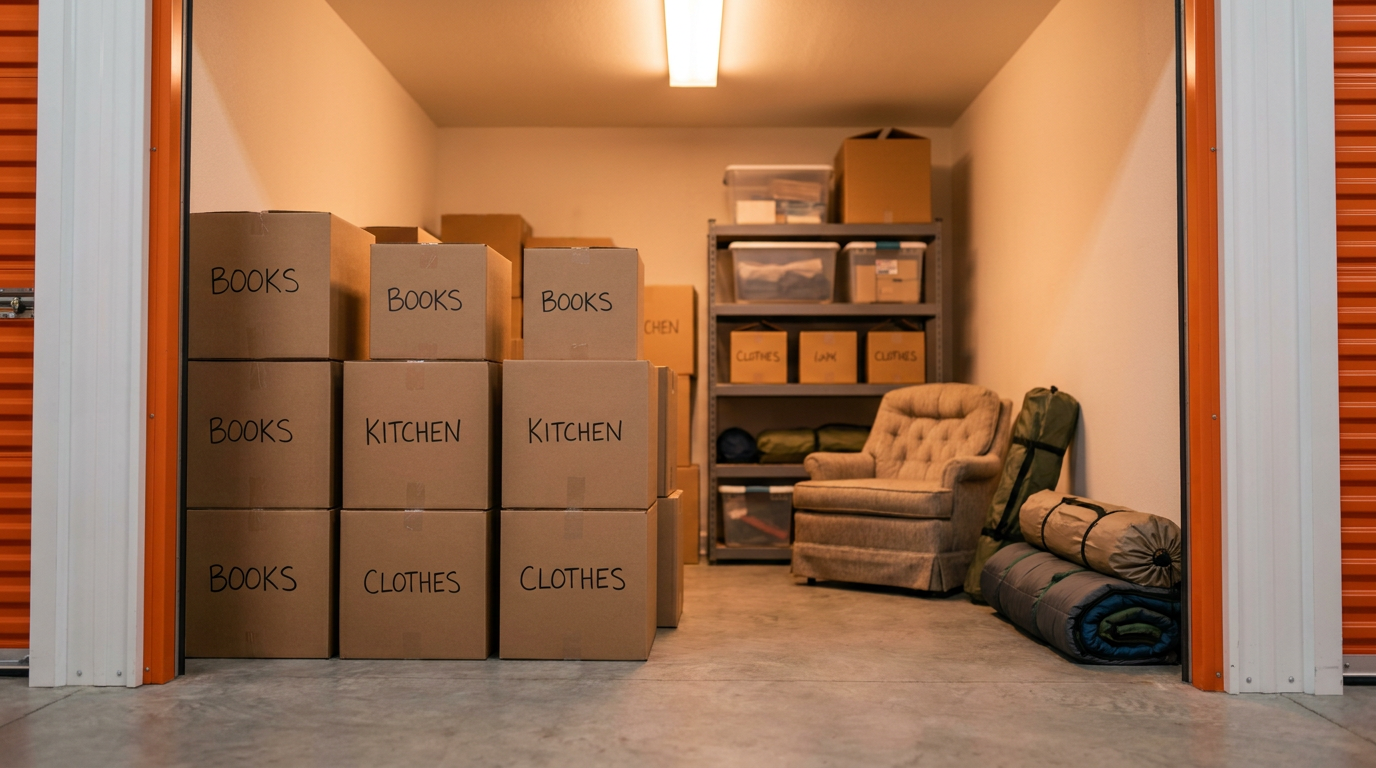
A 10x10 storage unit provides 100 square feet of floor space with 8 to 10 feet of ceiling height. This translates to 800 to 1,000 cubic feet of total volume. For perspective, that equals approximately half of a standard one-car garage or a small bedroom.
The practical capacity differs from theoretical capacity. According to ConsumerAffairs analysis, most renters effectively use 70 to 80% of available space after accounting for walkways and safe stacking practices. A 10x10 unit realistically holds:
- Furniture: Queen bed frame, mattress, sofa, dining table with four chairs, dresser, and two nightstands
- Boxes: 20 to 50 medium moving boxes depending on furniture volume
- Appliances: Refrigerator, washer, dryer, and small kitchen appliances
- Extras: Bicycles, skis, or seasonal decorations with efficient packing
The 10x10 size works well for one-bedroom apartment contents or a lightly furnished two-bedroom space. Families with extensive outdoor gear collections should consider stepping up to a 10x15 for comfortable access.
What Does a 5x10 Storage Unit Look Like?
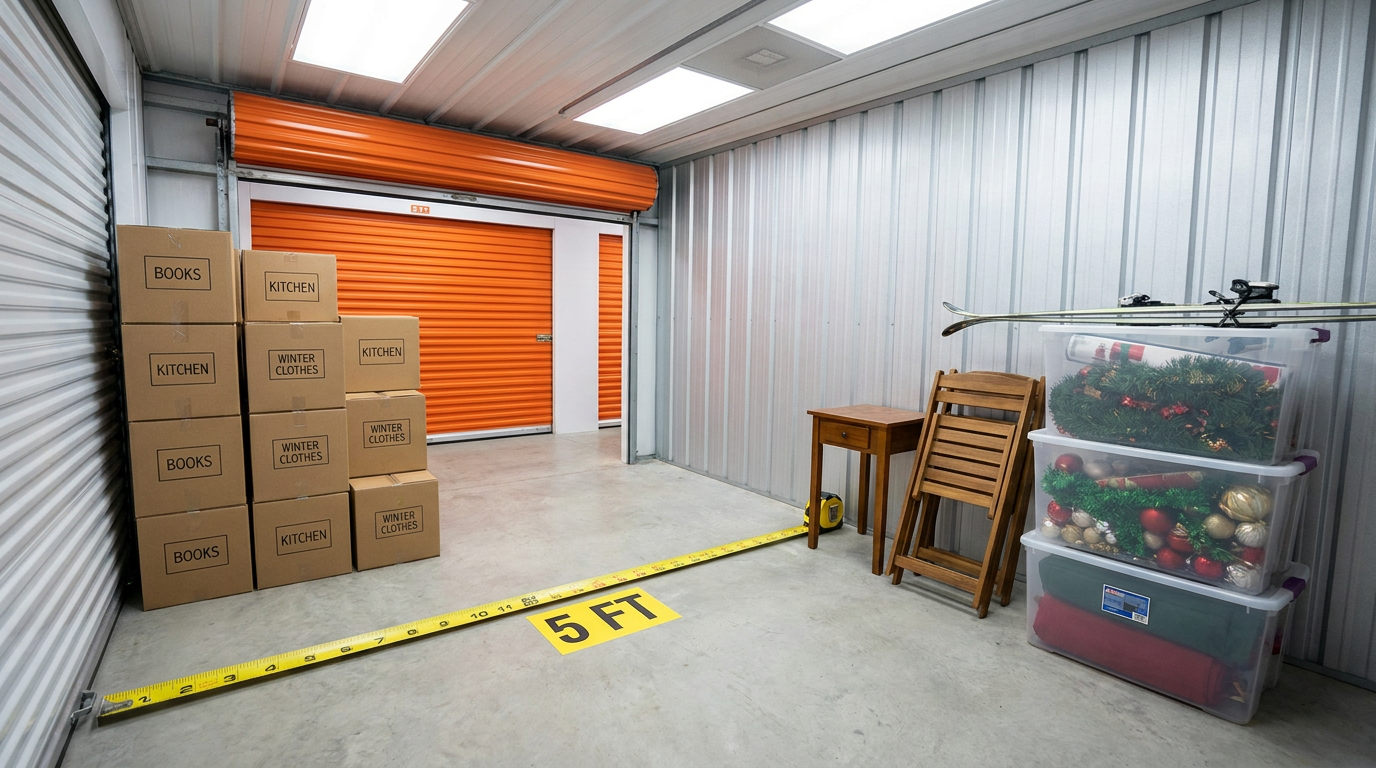
A 5x10 storage unit measures 5 feet wide by 10 feet deep, providing 50 square feet of floor space. Picture a standard walk-in closet or a hallway approximately 15 feet long. With 8-foot ceilings, total volume reaches 400 cubic feet.
This size represents the sweet spot for studio apartments and small one-bedroom moves. A typical 5x10 unit accommodates:
- One twin or full-size mattress and box spring (stored vertically)
- Small dresser or chest of drawers
- 10 to 15 medium moving boxes
- Desk and office chair
- Several storage totes and seasonal items
The 5x10 configuration excels for college students between semesters, seasonal workers storing belongings during off-seasons, and homeowners decluttering a single room. It offers enough depth to create a narrow center aisle while keeping items accessible.
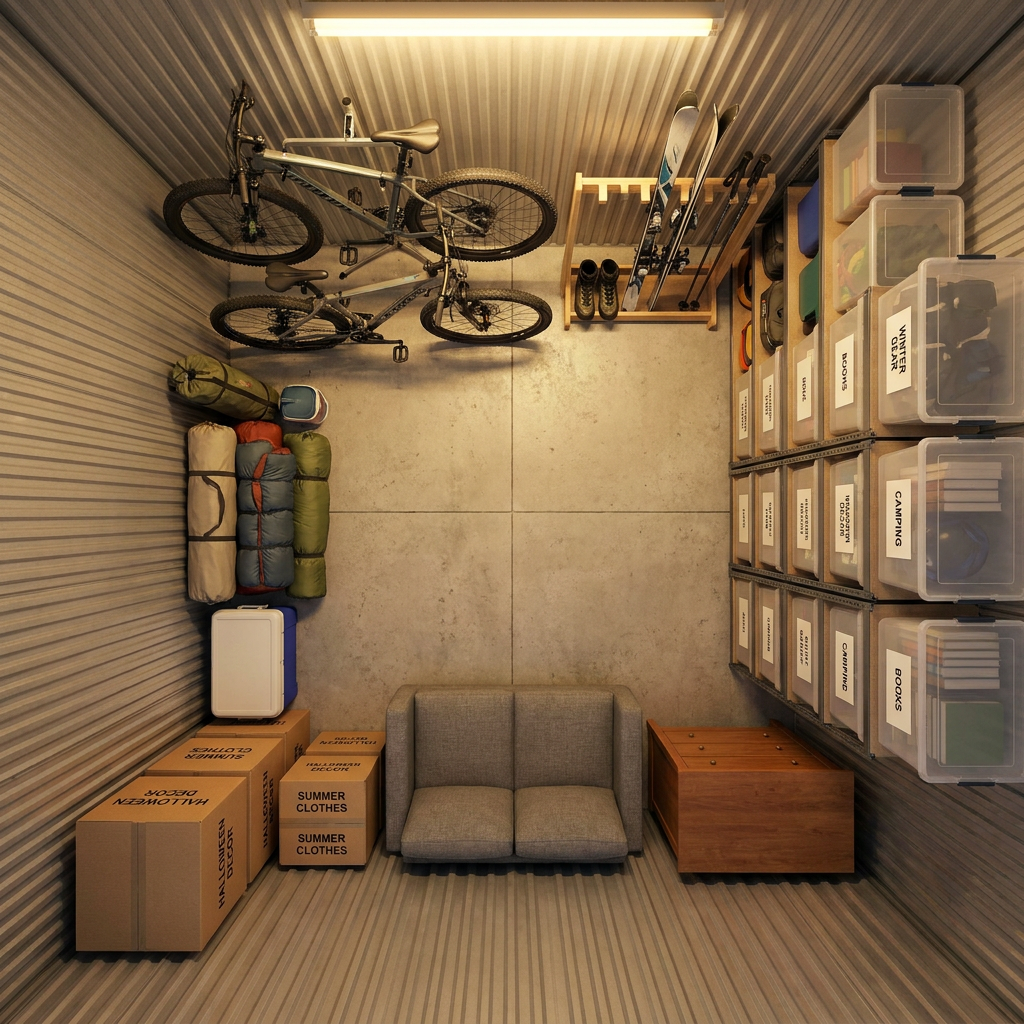
Storage Unit Sizes by Home Type
Matching your home size to the right storage unit eliminates guesswork. These recommendations from U-Haul's storage guide assume typical American furnishing levels. Adjust up for heavily furnished homes or down for minimalist lifestyles.
Studio or Small One-Bedroom Apartment
Recommended size: 5x10 (tight packing) or 10x10 (comfortable access)
A 5x10 unit handles studio contents when you pack efficiently and store mattresses vertically. Choose a 10x10 if you own bulky furniture like a sectional sofa, entertainment center, or multiple large appliances. The extra 50 square feet costs $50 to $100 more monthly but dramatically improves accessibility.
Standard One-Bedroom Apartment
Recommended size: 10x10
This size fits a complete one-bedroom apartment including living room furniture, bedroom set, kitchen table, and 20 to 30 boxes. Most one-bedroom renters find 10x10 provides adequate space with room for a small walkway.
Two-Bedroom Home
Recommended size: 10x10 (minimal furnishings) or 10x15 (fully furnished)
Two-bedroom homes vary significantly in contents. A young couple with basic IKEA furniture fits comfortably in a 10x10. Families with multiple bedroom sets, a full living room, and accumulated belongings need 10x15 for safe, organized storage.
Three-Bedroom Home
Recommended size: 10x15 (tight) or 10x20 (recommended)
Three-bedroom households typically accumulate enough belongings to warrant a 10x20 unit. This size equals a standard one-car garage and handles multiple bedroom sets, living and dining room furniture, appliances, and 50 or more boxes.
Four-Bedroom Home or Larger
Recommended size: 10x25 or 10x30
Large family homes require garage-sized storage. A 10x30 unit provides 300 square feet and accommodates entire household contents plus garage items like lawn equipment, tools, and outdoor furniture.
Mountain Town Storage: Crested Butte Considerations
Storage needs in mountain communities like Crested Butte differ from typical suburban scenarios. The Gunnison Valley's elevation of 8,885 feet creates unique challenges that affect both unit size selection and feature requirements.
Outdoor Recreation Gear Factor
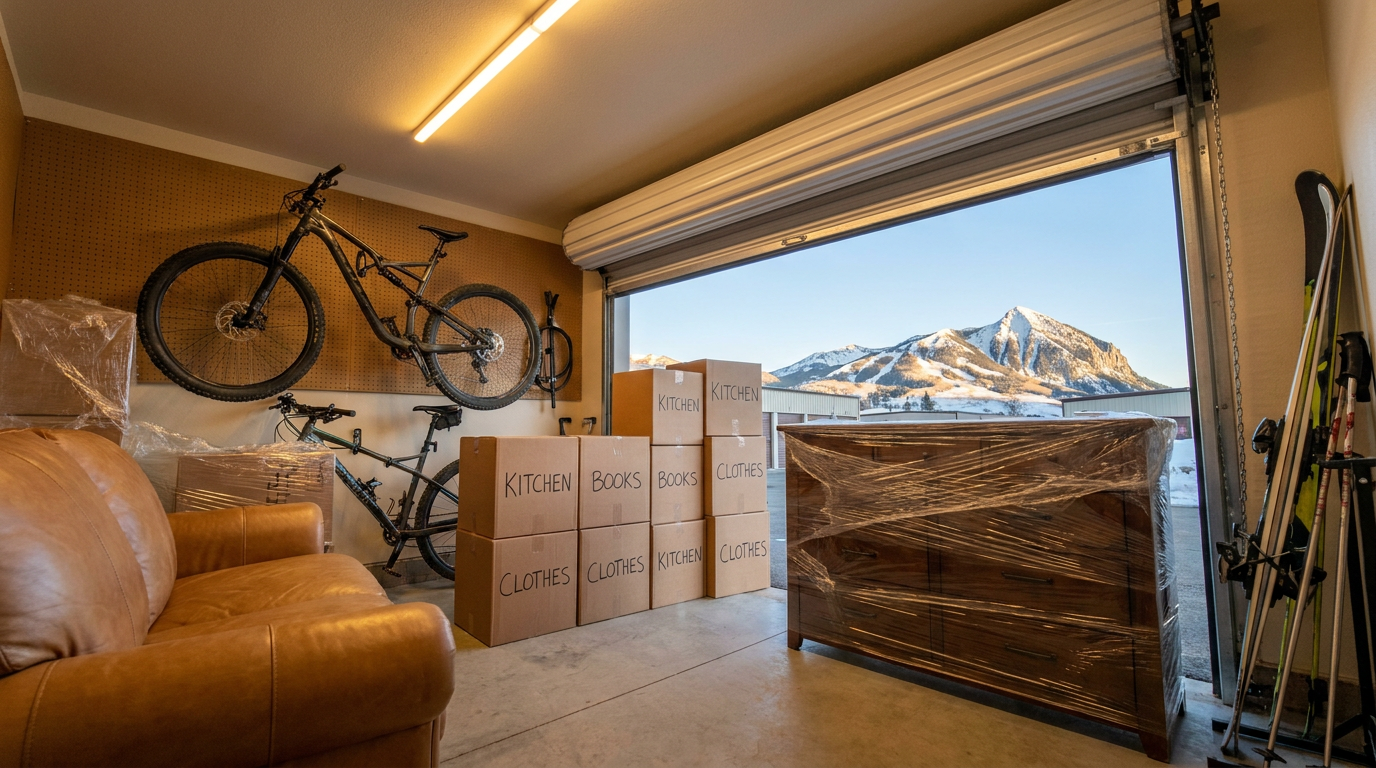
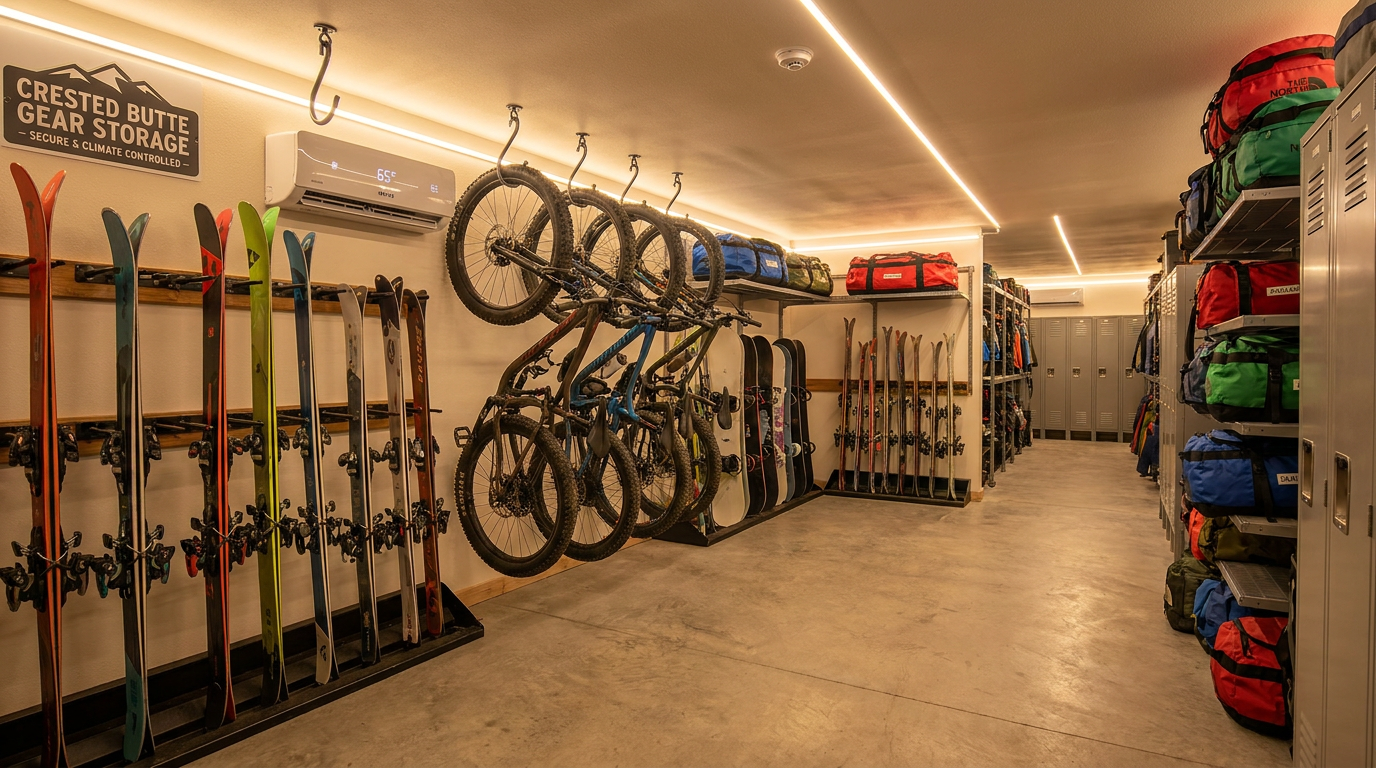
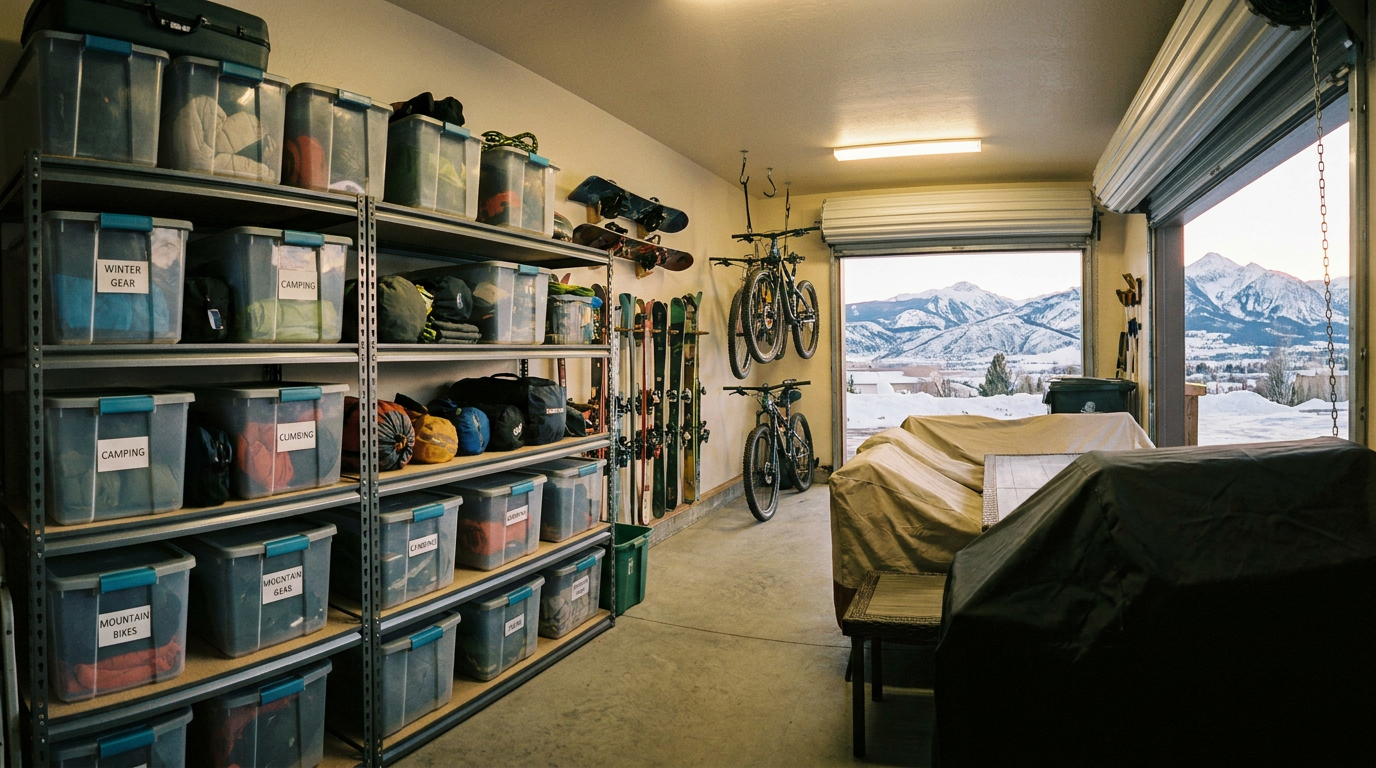
Crested Butte residents and seasonal visitors accumulate substantial outdoor equipment. A household that fits in a 10x10 elsewhere may need a 10x15 here to accommodate:
- Winter gear: Multiple ski and snowboard sets, boots, poles, avalanche safety equipment
- Summer gear: Mountain bikes, paddleboards, kayaks, camping equipment
- Year-round: Climbing gear, fishing equipment, hunting supplies
- Seasonal tires: Winter and summer tire sets for multiple vehicles
Local ski shops and outdoor outfitters use business storage solutions to manage seasonal inventory rotations. A typical bike shop stores 30 to 50 rental bikes during winter months, requiring 10x20 or larger units.
Climate Control Requirements
Winter temperatures in Crested Butte regularly drop to minus 20 degrees Fahrenheit. Summer highs reach 80 degrees F with intense UV exposure at altitude. This 100-degree temperature swing damages unprotected items within months.
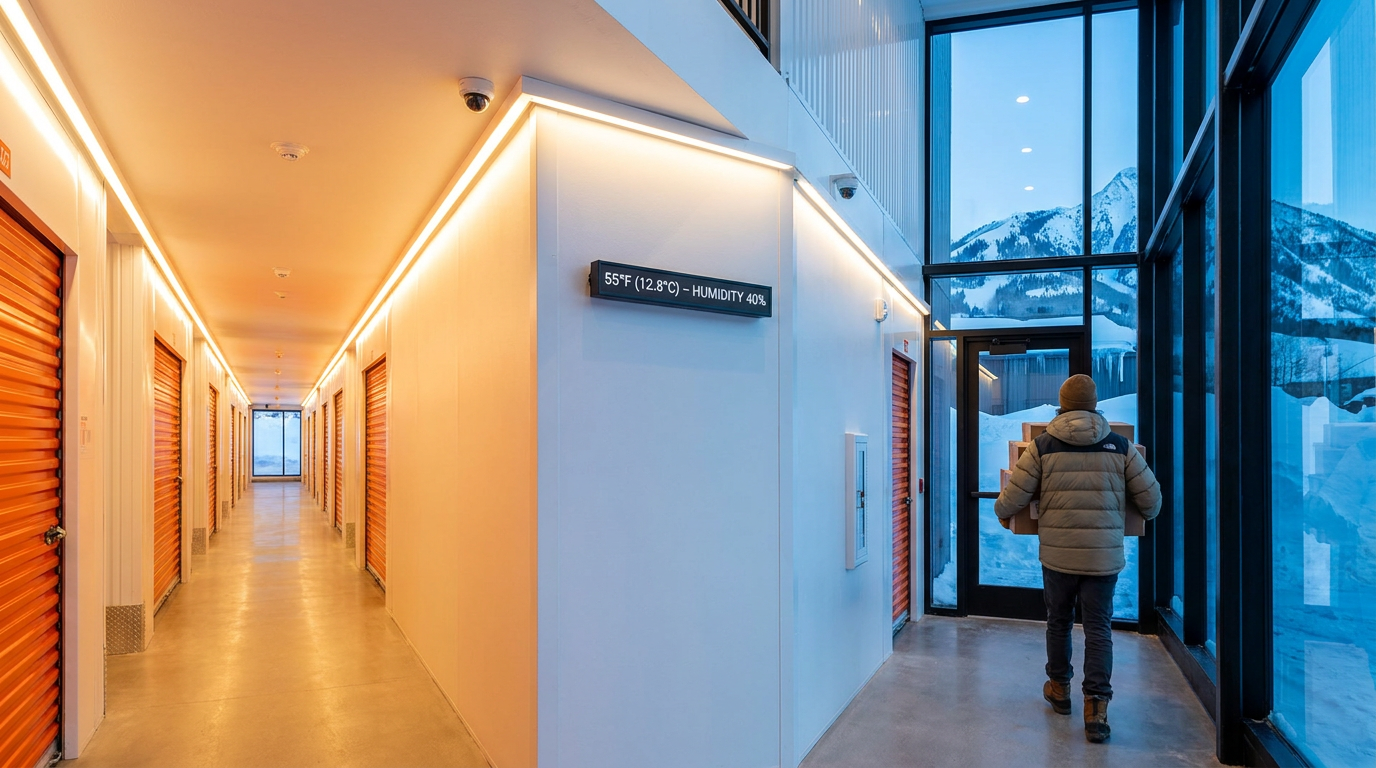
Climate-controlled units maintain consistent temperatures between 55 and 80 degrees F year-round. Items requiring climate control include:
- Electronics: Computers, TVs, gaming systems, audio equipment
- Wood furniture: Antiques, hardwood pieces, musical instruments
- Documents: Photos, important papers, books, artwork
- Specialty gear: Carbon fiber bikes, high-end skis, leather goods
The cost premium for climate control runs 20 to 50% above standard units. For a 10x10 unit, expect to pay $250 to $400 monthly for climate-controlled space in mountain markets versus $150 to $250 for standard units. View our complete storage unit size guide for current availability.
Can You Fit a Queen Mattress in a 5x5 Storage Unit?
Yes, a queen mattress fits in a 5x5 storage unit when stored vertically. A standard queen mattress measures 60 inches wide by 80 inches long (5 feet by 6 feet 8 inches). Standing upright against the back wall, it occupies roughly 5 feet of width and 8 inches of depth.
However, practical considerations limit this approach. After placing a queen mattress vertically, remaining floor space drops to approximately 20 square feet. You can fit:
- 4 to 6 medium boxes stacked in front of the mattress
- A small dresser or nightstand
- Limited additional items along the side walls
For mattress-plus-furniture storage, a 5x10 unit provides significantly better utility. The extra 25 square feet allows horizontal mattress storage with room for bedroom furniture and boxes. Mattress storage bags ($15 to $30 from U-Haul or Home Depot) protect against dust and moisture regardless of unit size.
How Many Bedrooms Fit in a 10x10 Storage Unit?
A 10x10 storage unit holds the contents of one fully furnished bedroom or one complete one-bedroom apartment. The 100 square feet of floor space and 800 to 1,000 cubic feet of volume accommodate:
- One bedroom: Queen bed frame, mattress, box spring, dresser, two nightstands, desk, chair, 10 to 15 boxes
- One-bedroom apartment: Bedroom furniture plus sofa, coffee table, dining table, four chairs, 20 to 30 boxes
Attempting to store two fully furnished bedrooms in a 10x10 creates access problems and risks damage from overpacking. The furniture physically fits when disassembled and stacked carefully, but retrieving specific items becomes impractical.
For two-bedroom contents, a 10x15 unit (150 square feet) provides adequate space with a center aisle for access. This size costs 30 to 50% more than a 10x10 but prevents the frustration of unpacking half the unit to reach items in back.
How to Calculate Your Storage Unit Size
Follow this four-step process to determine your exact storage requirements. This method, recommended by the Self Storage Association, produces more accurate results than home-size estimates alone.
Step 1: Create an Inventory List
Walk through your home and list every item going into storage. Group items by category:
- Large furniture: Sofas, beds, dining tables, dressers, desks
- Medium items: Chairs, nightstands, small tables, appliances
- Boxes: Estimate quantity by room (typically 8 to 12 boxes per room)
- Odd-shaped items: Bikes, skis, kayaks, lawn equipment
Step 2: Estimate Cubic Footage
Use these standard volume estimates for common items:
| Item | Cubic Feet |
|---|---|
| Queen mattress and box spring | 60 cu ft |
| Three-seat sofa | 50 to 70 cu ft |
| Standard refrigerator | 60 to 70 cu ft |
| Dining table with four chairs | 80 to 100 cu ft |
| Dresser | 30 to 40 cu ft |
| Washer or dryer (each) | 25 to 30 cu ft |
| Medium moving box | 3 cu ft |
| Large moving box | 4.5 to 5 cu ft |
| Mountain bike | 40 to 50 cu ft |
Step 3: Add Access Space
Add 20 to 30% to your total cubic footage estimate for walkway space and safe stacking margins. If you calculated 600 cubic feet of belongings, plan for 720 to 780 cubic feet of unit capacity.
Step 4: Match to Unit Size
Compare your adjusted total to standard unit volumes:
- 5x5x8: 200 cubic feet
- 5x10x8: 400 cubic feet
- 10x10x8: 800 cubic feet
- 10x15x8: 1,200 cubic feet
- 10x20x8: 1,600 cubic feet
When your calculation falls between sizes, choose the larger option. The monthly cost difference of $30 to $75 prevents damage from overpacking and eliminates access frustrations.
Drive-Up vs Interior Storage Units
Storage facilities offer two primary access configurations: drive-up units with exterior doors and interior units accessed through hallways. Each type suits different use cases.
Drive-Up Storage Units
Drive-up units feature roll-up doors that open directly to parking areas or driveways. Benefits include:
- Loading efficiency: Park directly at your unit door, reducing carrying distance to zero
- Large item access: No hallways, elevators, or tight corners to navigate
- Vehicle storage: 10x20 and larger drive-up units accommodate cars, motorcycles, ATVs, and snowmobiles
- Time savings: Average visit takes 15 to 30 minutes less than interior units
Drive-up units work best for heavy furniture, appliances, frequent access needs, and vehicle storage. They typically cost 10 to 20% more than comparable interior units due to higher construction costs and convenience premium.
Interior Storage Units
Interior units sit within enclosed buildings, accessed through hallways. Advantages include:
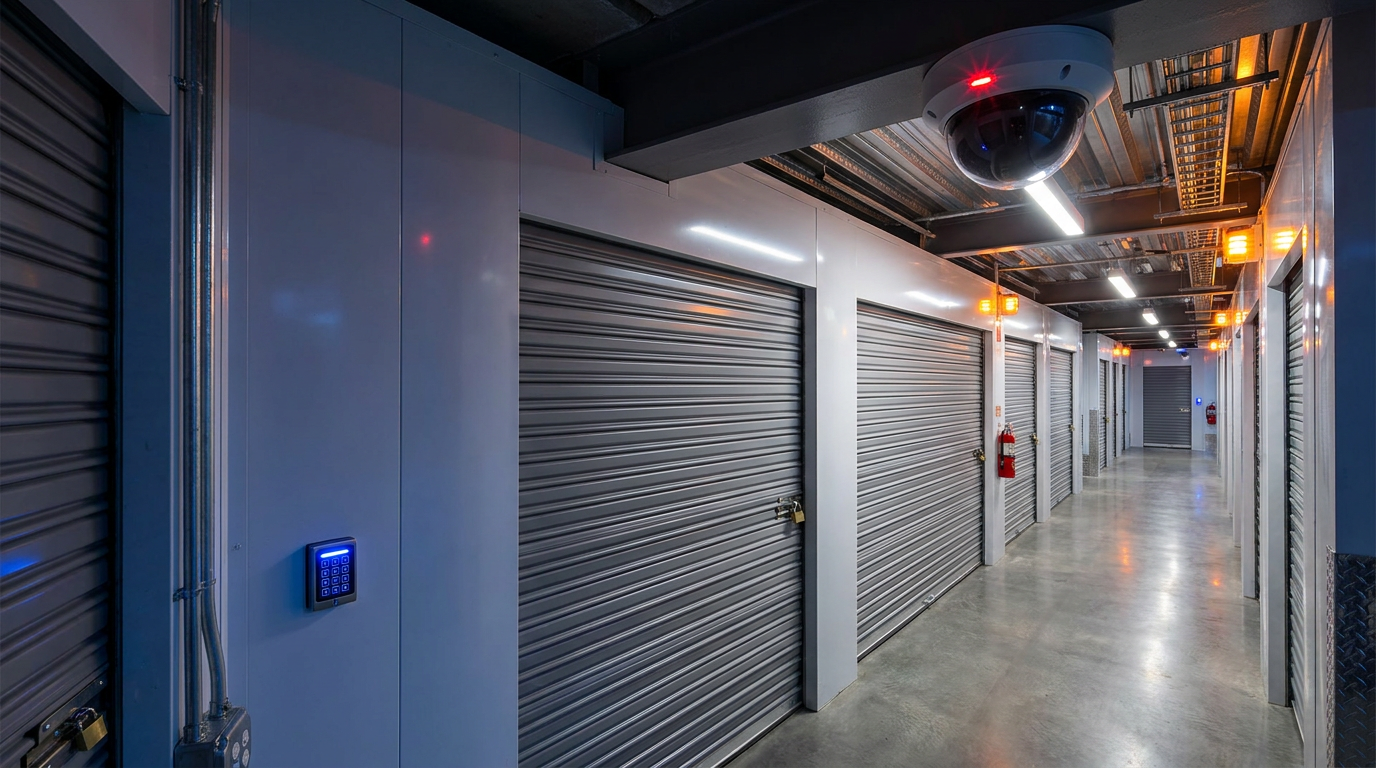
- Climate control: Most climate-controlled units are interior for HVAC efficiency
- Weather protection: No exposure to rain, snow, or wind during loading
- Enhanced security: Multiple access points and building entry create additional barriers
- Lower cost: Typically 10 to 20% less expensive than drive-up units
Interior units suit long-term storage of climate-sensitive items, smaller loads that are easy to carry, and situations where cost outweighs convenience. Check our frequently asked questions for details on access procedures.
Storage Unit Costs: What to Expect
Storage unit pricing varies by location, size, features, and demand. National averages from industry data show the following monthly ranges:
| Unit Size | National Average | Mountain Markets |
|---|---|---|
| 5x5 | $50 to $100 | $75 to $150 |
| 5x10 | $75 to $150 | $125 to $225 |
| 10x10 | $100 to $225 | $200 to $375 |
| 10x15 | $150 to $325 | $300 to $500 |
| 10x20 | $175 to $400 | $400 to $700 |
| 10x25 | $200 to $450 | $500 to $850 |
Mountain resort communities like Crested Butte, Aspen, Vail, and Park City command premium pricing due to limited real estate, high construction costs, and strong seasonal demand. Climate-controlled units add 20 to 50% to base prices.
Month-to-month leases provide flexibility but may cost 5 to 15% more than long-term commitments. Some facilities offer first-month discounts of 50% or more to attract new customers. Always ask about move-in specials and price guarantees.
Tips for Maximizing Storage Unit Space
Professional organizers and moving companies use these techniques to fit more belongings safely into smaller units. Implementing these strategies can reduce your required unit size by one tier, saving $50 to $150 monthly.
Disassemble Furniture
Remove legs from tables and desks. Take apart bed frames. Detach headboards. Store hardware in labeled plastic bags taped to the furniture piece. Disassembled furniture occupies 30 to 50% less volume than assembled pieces.
Use Vertical Space
Stack boxes to within 12 inches of the ceiling. Place heavy boxes on bottom, medium in the middle, and light or fragile items on top. Freestanding shelving units ($30 to $100 from Home Depot or Amazon) maximize vertical organization while keeping items accessible.
Store Mattresses Vertically
Standing mattresses against back walls frees significant floor space. Use mattress bags and lean them at a slight angle to prevent bowing. King mattresses require support straps to maintain position.
Fill Hollow Spaces
Pack boxes, linens, or soft items inside dressers, appliances, and hollow furniture. Stuff pillows and blankets into garbage bags and wedge them into gaps. Every cubic foot of wasted space costs money.
Create an Aisle
Leave a 2 to 3 foot pathway from door to back wall. This access aisle uses 15 to 20% of floor space but prevents the need to unload half the unit when retrieving items. For units storing items longer than 3 months, an aisle is essential.
Label Everything
Mark boxes on at least two sides with contents and room destination. Create an inventory list with box numbers. Keep frequently needed items near the front. This organization saves hours over the storage period.
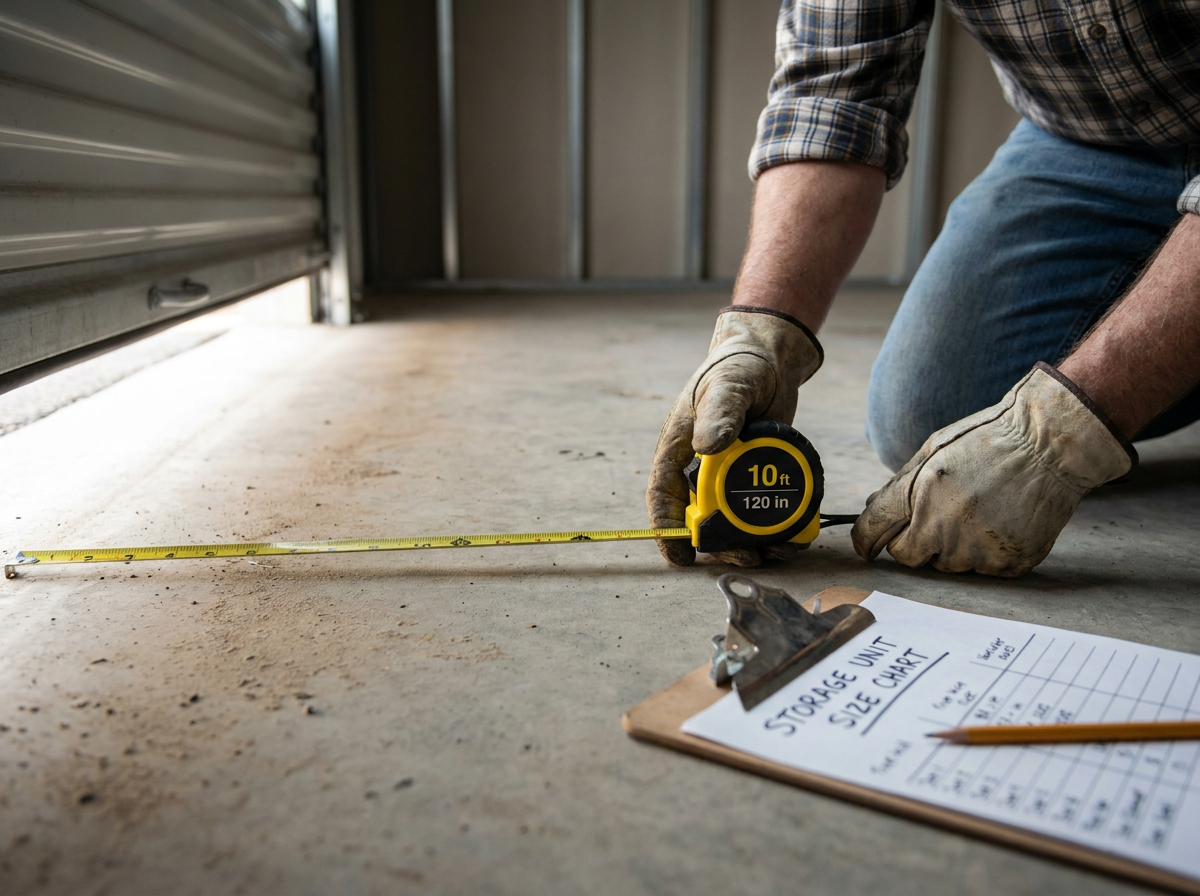
Frequently Asked Questions
How do I figure out what size storage unit I need?
List all items you plan to store, estimate their combined cubic footage using standard measurements (sofa: 60 cubic feet, queen bed: 60 cubic feet, medium box: 3 cubic feet), add 25% for access space, then match to the nearest unit size. A one-bedroom apartment typically requires 10x10 (800 cubic feet), while a three-bedroom home needs 10x20 (1,600 cubic feet).
Can you fit a queen mattress in a 5x5 storage unit?
Yes, a queen mattress (60 by 80 inches) fits in a 5x5 unit when stored vertically against the back wall. However, this leaves only about 20 square feet of remaining floor space for other items. For mattress plus bedroom furniture, a 5x10 unit provides significantly better utility.
How many bedrooms can fit in a 10x10 storage unit?
A 10x10 storage unit holds the contents of one fully furnished bedroom or one complete one-bedroom apartment. Attempting to store two bedroom sets creates access problems and damage risks. For two-bedroom contents, choose a 10x15 unit.
What does a 50 sq ft storage unit look like?
A 50 square foot storage unit (typically 5x10) resembles a large walk-in closet or a hallway about 15 feet long. With 8-foot ceilings, it provides 400 cubic feet of volume. This size accommodates a studio apartment, including a mattress, small dresser, desk, and 10 to 15 boxes.
Do I need climate-controlled storage in Colorado?
Climate control is strongly recommended for electronics, wood furniture, photographs, documents, musical instruments, and high-end outdoor gear. Colorado mountain towns experience temperature swings from minus 20 to 80 degrees F, which damages sensitive items within months. Climate-controlled units maintain 55 to 80 degrees F year-round. Learn more about protecting your stored belongings.
What is the most popular storage unit size?
The 10x10 storage unit is the most popular size nationally, accounting for 38% of all rentals according to industry data. The 5x10 ranks second at 28% of rentals. Together, these two sizes cover approximately two-thirds of all residential storage needs.
How much does a 10x10 storage unit cost per month?
A 10x10 storage unit costs $100 to $225 monthly at national average rates. Mountain resort communities like Crested Butte, Vail, and Aspen charge $200 to $375 monthly due to limited real estate and high demand. Climate-controlled 10x10 units add 20 to 50% to these base prices.
|