What Size Storage Unit Do I Need? Complete Size Guide for 2026 |
| WHAT SIZE STORAGE UNIT DO I NEED
⏱ 13 min read ·
📄 #2,454 words
Find the right storage unit size for your needs. Compare 5x5 to 10x30 units, see what fits in each, and get expert tips for maximizing space efficiently.
|
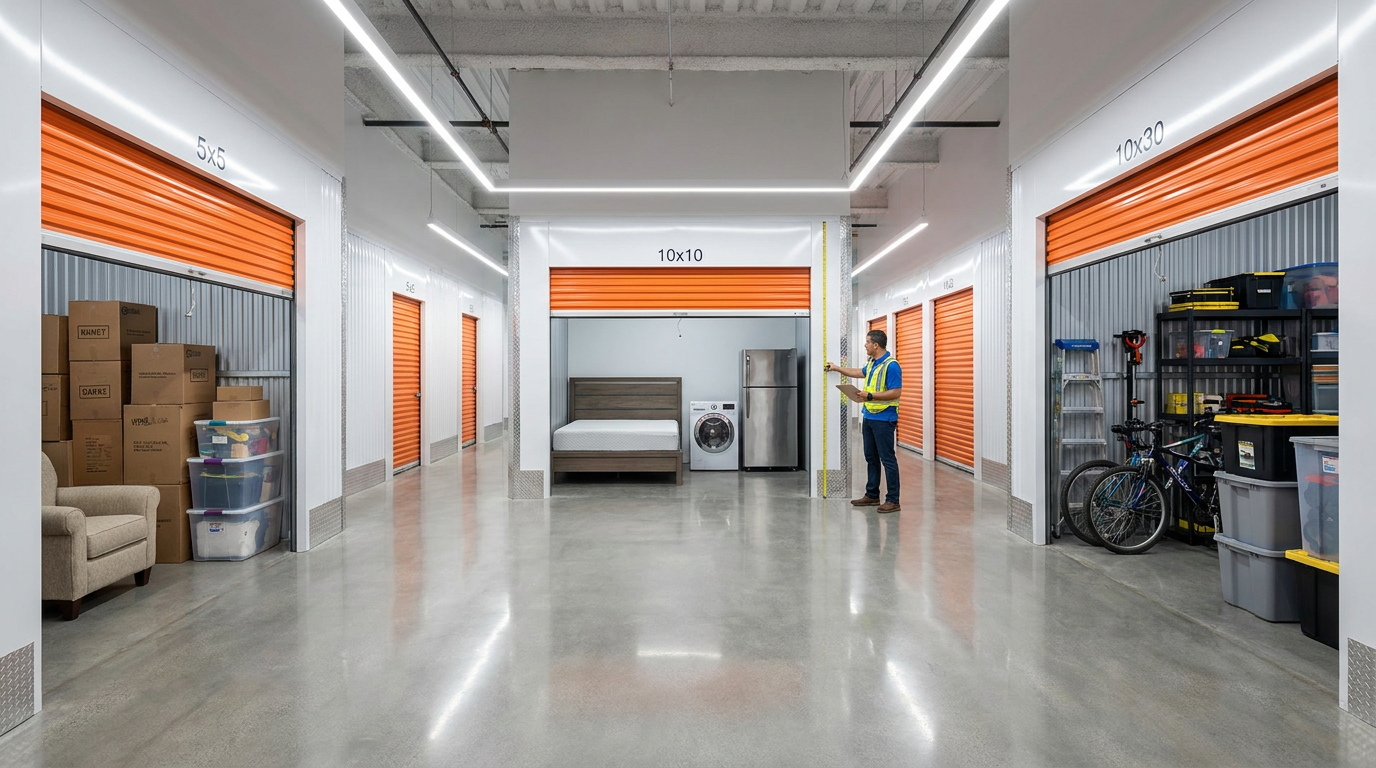
M atch your storage unit size to the number of rooms you are storing. A 5x10 unit fits a studio or one bedroom, a 10x10 unit holds a two-bedroom apartment, and a 10x20 unit accommodates a three to four bedroom home. Most units stand 8 feet tall, allowing vertical stacking to maximize space.
| Key Points: | |
|---|---|
| • | 5x5 units (25 sq ft) fit small furniture, boxes, and seasonal items for $50 to $100 per month |
| • | 10x10 units (100 sq ft) hold contents of a two-bedroom apartment and are the most popular size nationwide |
| • | Climate-controlled units cost 20% to 50% more but protect items from temperatures below 32°F or above 90°F |
| • | Always estimate 10% to 15% more space than you think you need for aisle access and airflow |
| • | Vehicle storage requires minimum 10x20 for cars, 10x30 or larger for trucks, boats, and RVs |
Storage Unit Size Chart: Quick Reference Guide
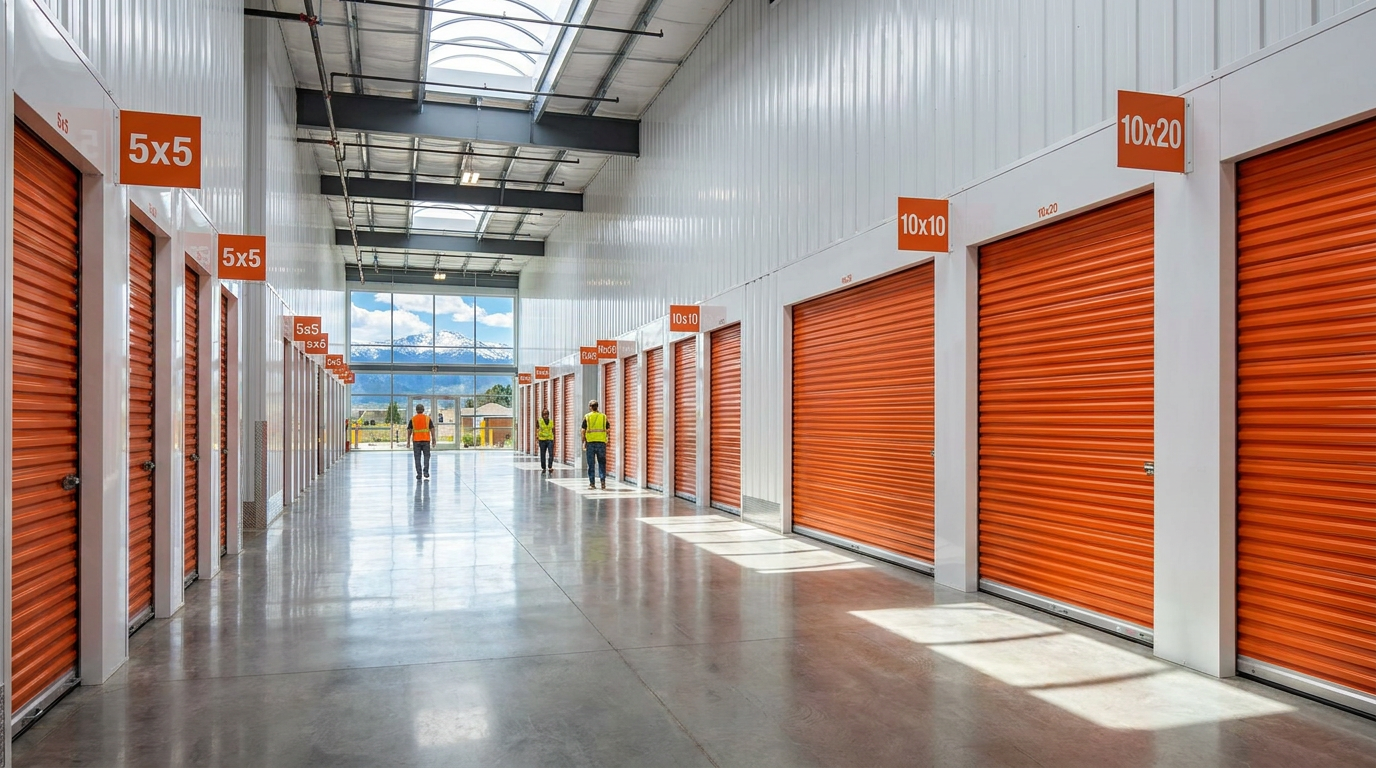
The Self Storage Association reports that 10x10 units account for approximately 30% of all rentals nationwide. Understanding standard dimensions helps you avoid paying for unused space or cramming belongings into a unit that is too small.
| Unit Size | Square Feet | Comparable To | Best For |
|---|---|---|---|
| 5x5 | 25 sq ft | Small walk-in closet | Boxes, seasonal decor, small furniture |
| 5x10 | 50 sq ft | Walk-in closet | Studio apartment, dorm room |
| 5x15 | 75 sq ft | Large walk-in closet | One-bedroom apartment |
| 10x10 | 100 sq ft | Half of a one-car garage | Two-bedroom apartment |
| 10x15 | 150 sq ft | Large bedroom | Three-bedroom home |
| 10x20 | 200 sq ft | One-car garage | Four-bedroom home, vehicle storage |
| 10x25 | 250 sq ft | Large one-car garage | Five-bedroom home, large vehicles |
| 10x30 | 300 sq ft | Standard two-car garage | Large home, RV, boat, commercial use |
For a detailed breakdown of each size option, visit our storage unit size guide to compare dimensions and see visual examples of what fits in each unit type.
How Big Is a 10x10 Storage Unit?
A 10x10 storage unit measures 10 feet wide by 10 feet deep, providing 100 square feet of floor space. With standard 8-foot ceilings, total cubic footage reaches 800 cubic feet. This equals roughly half of a standard one-car garage or the size of a spare bedroom.
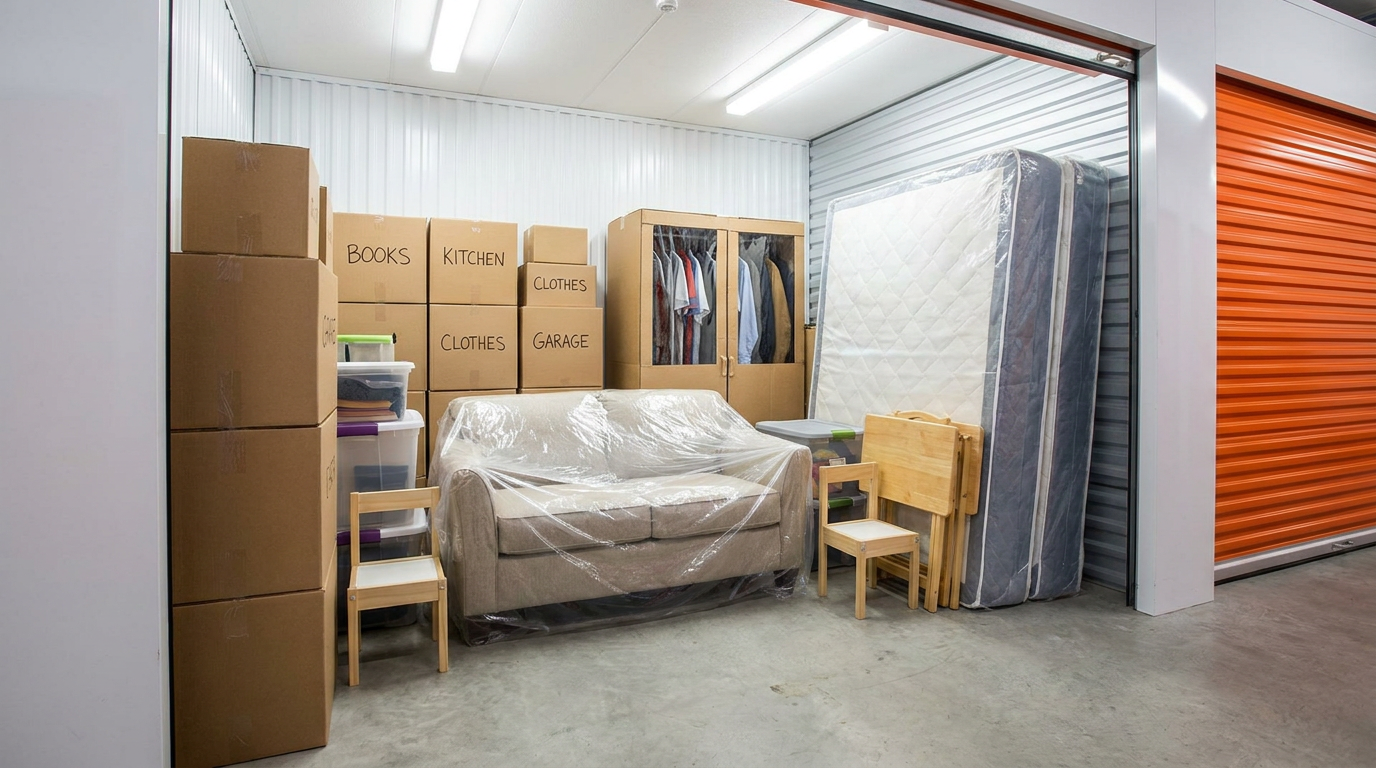
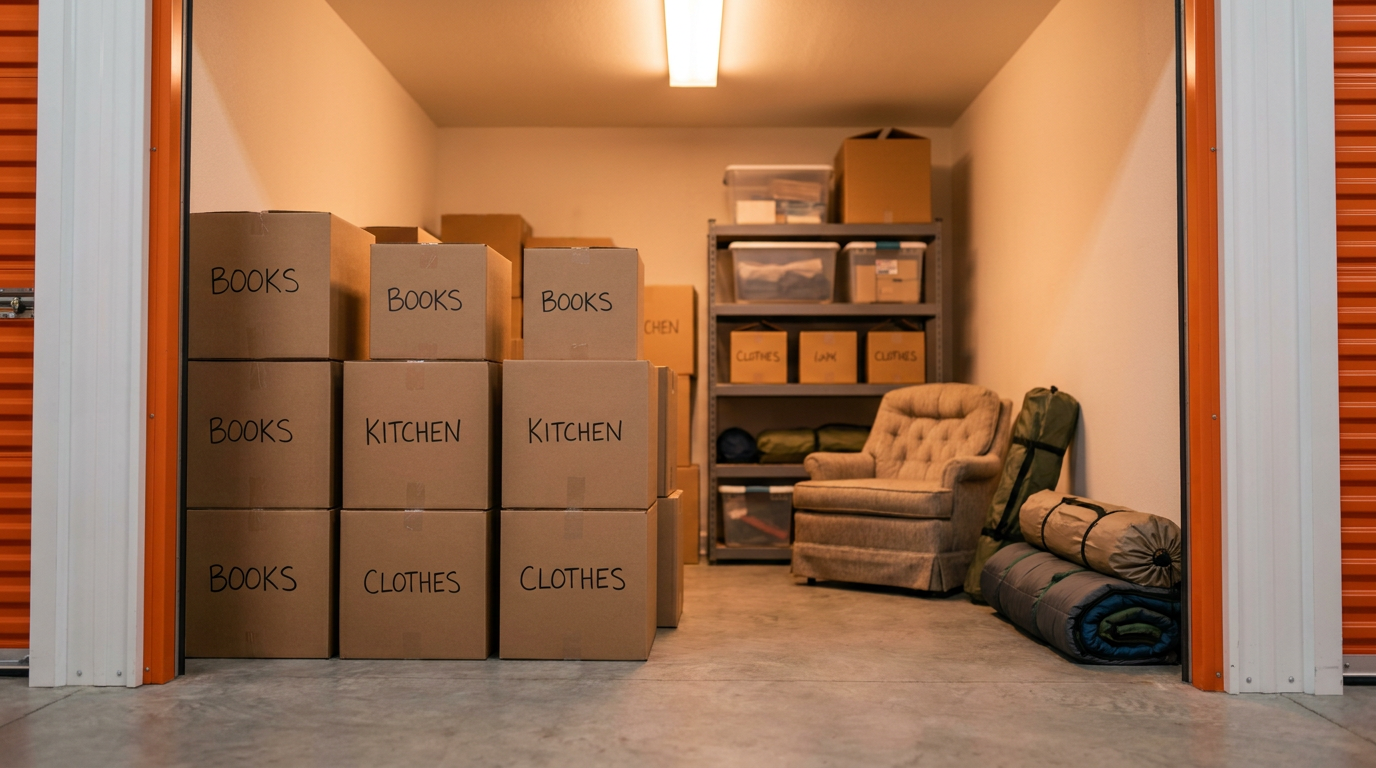
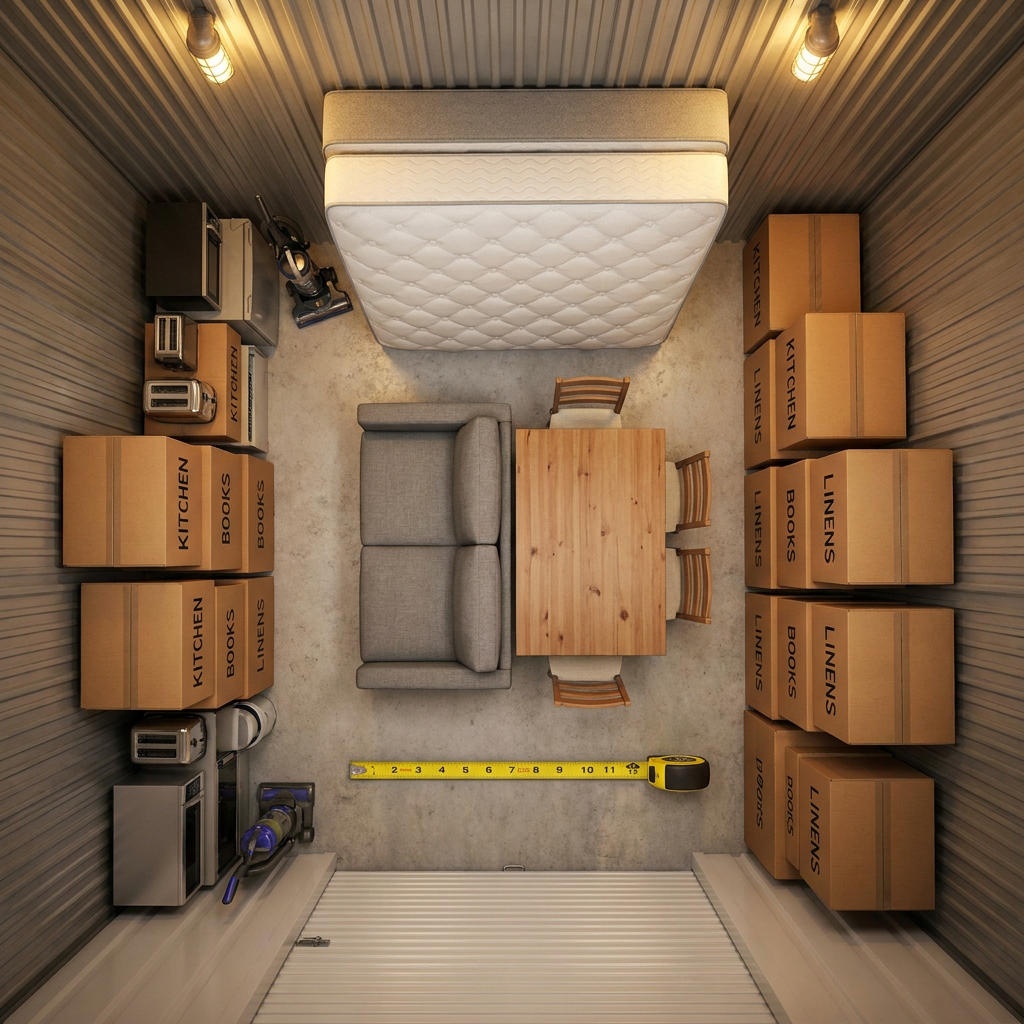
According to Public Storage, a 10x10 unit typically holds the contents of two to three furnished rooms. Expect to fit a queen or king mattress set, a dresser, a small dining set, a couch, and 20 to 30 medium moving boxes. Proper stacking allows efficient use of vertical space.
What Fits in a 10x10 Storage Unit
The 10x10 size works well for renters moving between apartments, homeowners decluttering, or families storing seasonal items. Here is a typical inventory that fits comfortably:
- Queen or king bedroom set including mattress, box spring, frame, and nightstands
- Full living room with sofa, loveseat, coffee table, and entertainment center
- Small dining table with four chairs
- Washer and dryer or other large appliances
- 25 to 30 medium-sized moving boxes
- Bicycles, sports equipment, or seasonal decorations
What Does a 50 Square Foot Storage Unit Look Like?
A 50 square foot storage unit, typically sized 5x10, resembles a standard walk-in closet. The space measures 5 feet wide by 10 feet deep with 8-foot ceilings, providing 400 cubic feet of storage volume. You can walk into the unit and access items on both sides.
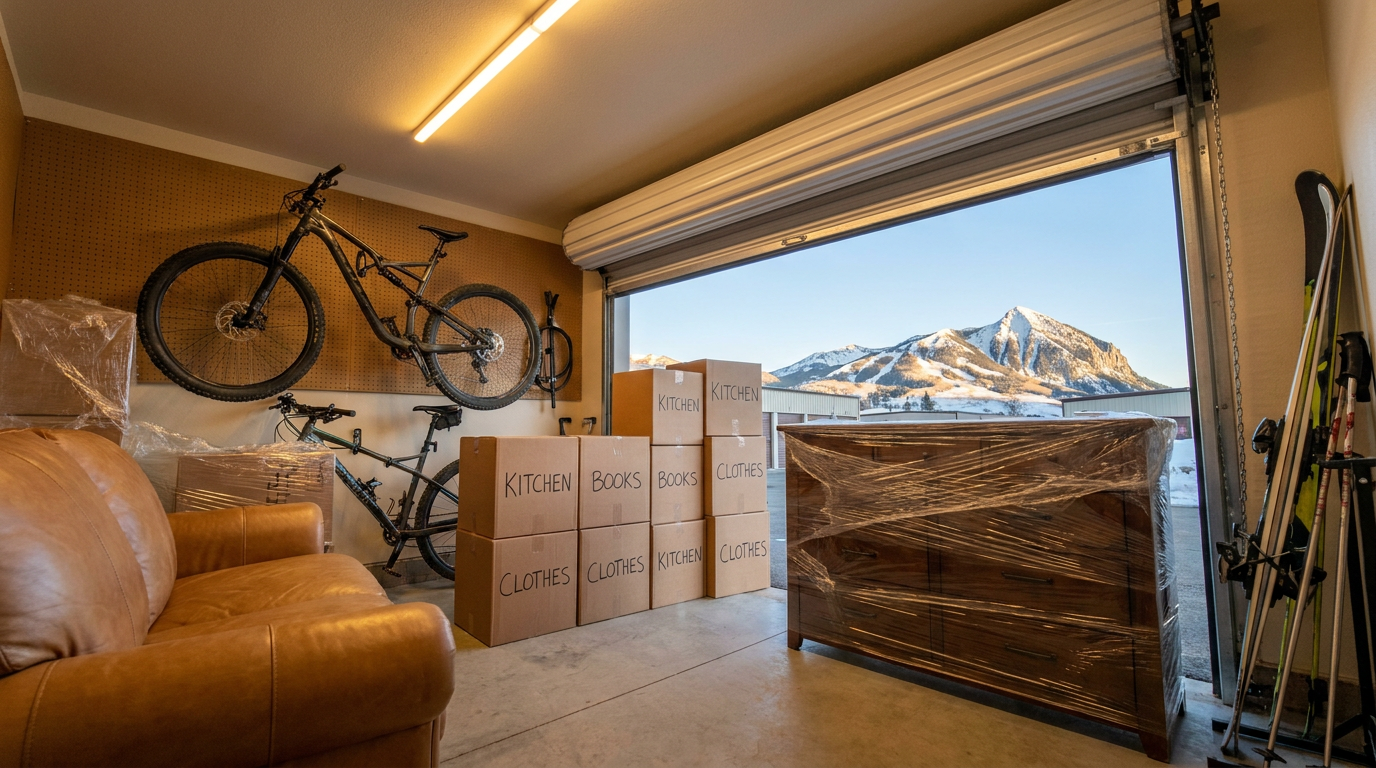
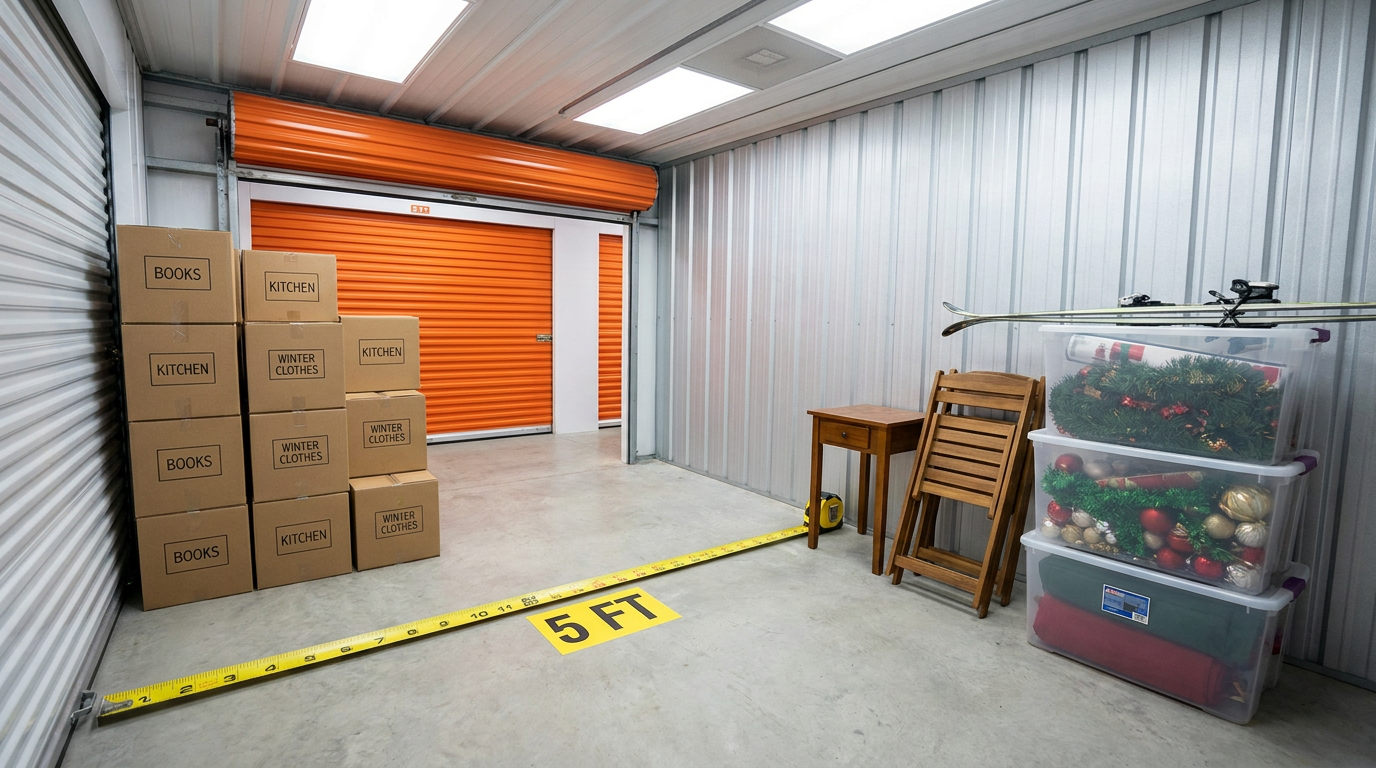
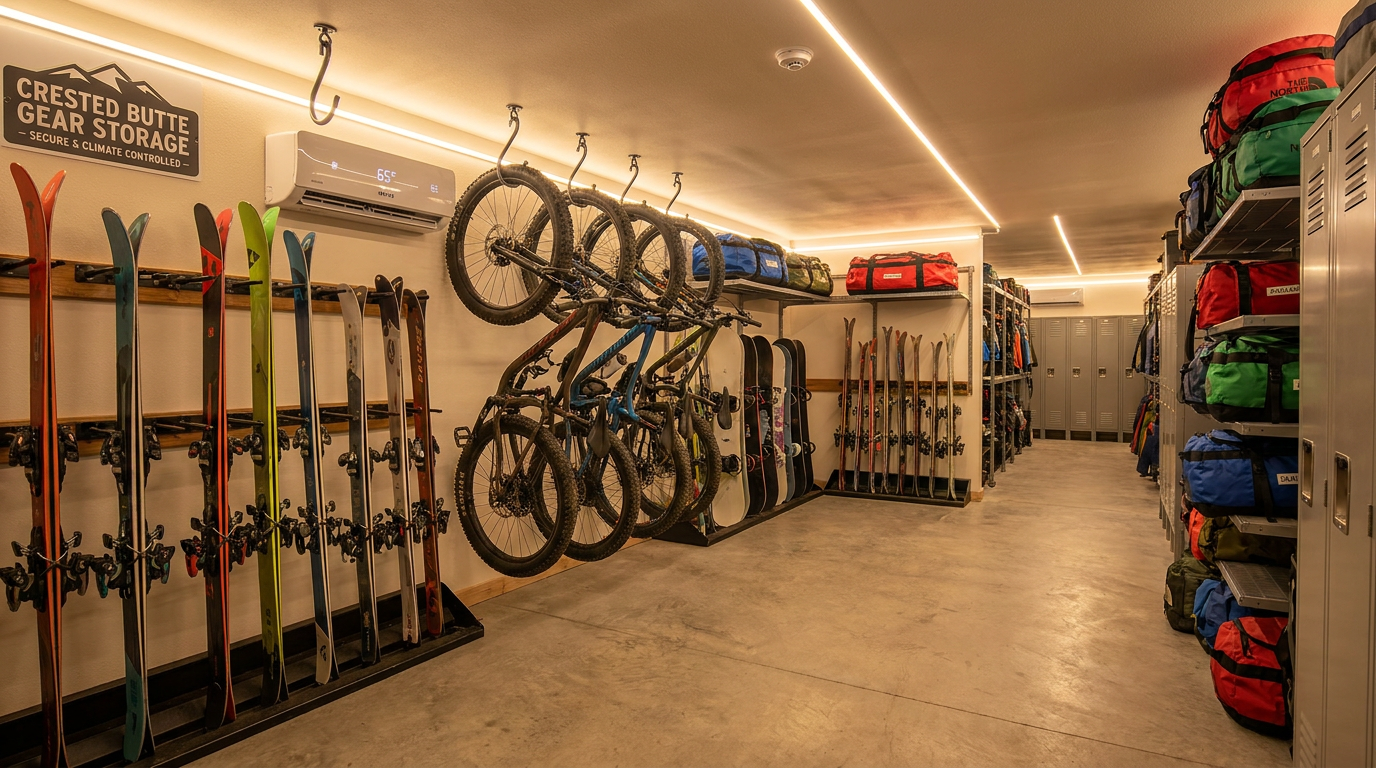
This size fits the contents of a studio apartment or single bedroom. Expect capacity for a twin or full mattress set, a small dresser, a desk, and approximately 15 to 20 boxes. Many renters use 5x10 units for seasonal gear storage, including skis, snowboards, camping equipment, and holiday decorations.
5x10 Storage Unit: Complete Breakdown
The 5x10 storage unit represents one of the most versatile options for individual renters. At 50 square feet, monthly costs typically range from $75 to $150 depending on location and climate control features. Urban areas like Denver, San Francisco, and New York City charge premium rates, while smaller markets offer lower pricing.
5x10 Unit Capacity Guide
A 5x10 unit accommodates these common items:
- Twin or full mattress with box spring
- Small dresser or chest of drawers
- Desk and office chair
- Bookshelf or small entertainment center
- 15 to 20 medium boxes
- Seasonal sports equipment like skis, bikes, or golf clubs
For outdoor enthusiasts in mountain communities, a 5x10 provides ample room for ski gear, mountain bikes, camping supplies, and climbing equipment. Climate-controlled options protect sensitive gear from temperature extremes that can damage bindings, derailleurs, and technical fabrics.
How to Calculate the Storage Unit Size You Need
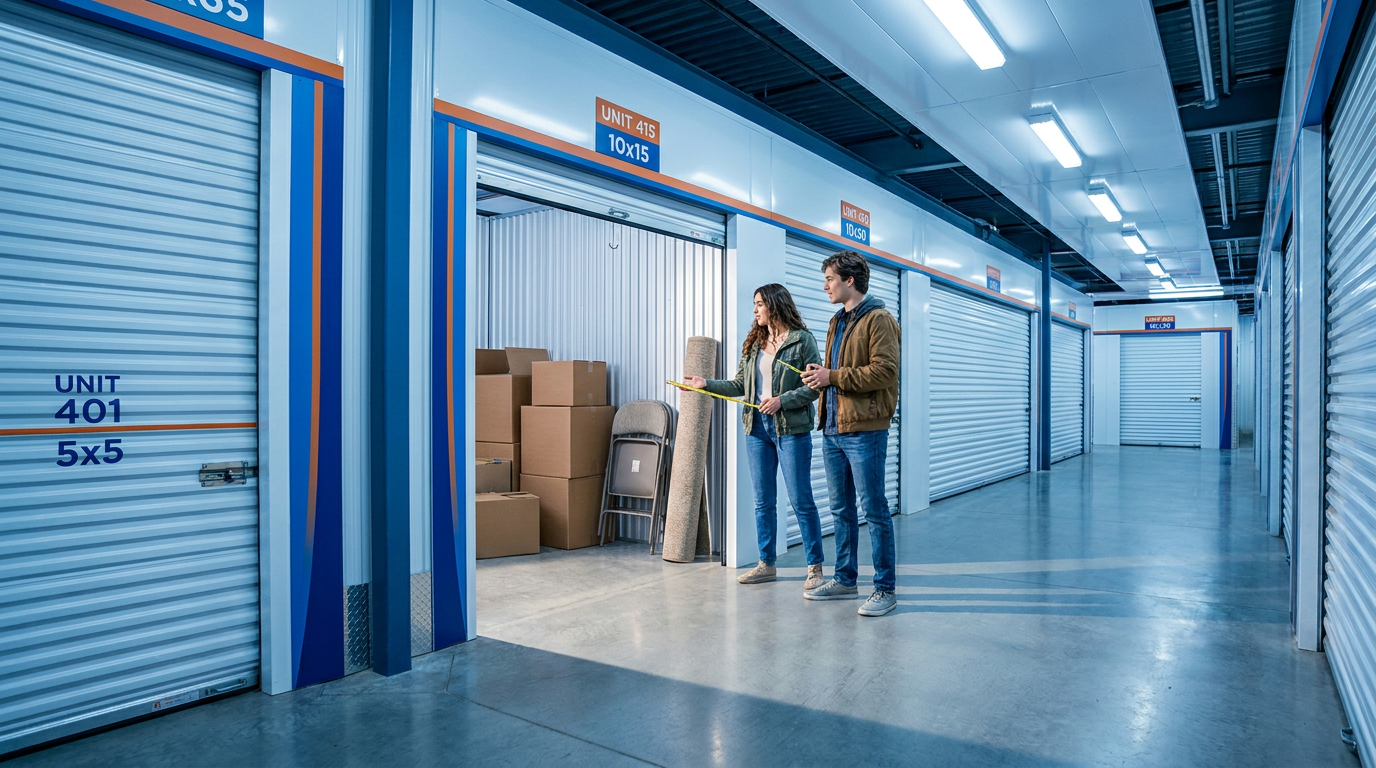
Calculating your required storage space involves three steps: inventory your items, measure large pieces, and add buffer space. The U-Haul storage guide recommends adding 10% to 15% extra space beyond your calculated needs for accessibility and airflow.
Step 1: Create a Complete Inventory
List every item going into storage. Group items by category: furniture, boxes, appliances, vehicles, and specialty items. Count the number of pieces in each category. This inventory prevents underestimating your needs and helps with insurance documentation.
Step 2: Measure Large Items
Measure the length, width, and height of furniture and appliances. Note any items that cannot be disassembled. A standard sofa measures approximately 7 feet long by 3 feet deep. A queen mattress measures 60 inches by 80 inches. These dimensions help determine minimum unit width requirements.
Step 3: Use the Room Count Method
For quick estimates, match your room count to recommended unit sizes:
| Home Size | Recommended Unit | Square Footage |
|---|---|---|
| Studio or dorm room | 5x5 or 5x10 | 25 to 50 sq ft |
| One-bedroom apartment | 5x10 or 5x15 | 50 to 75 sq ft |
| Two-bedroom apartment | 10x10 | 100 sq ft |
| Three-bedroom home | 10x15 | 150 sq ft |
| Four-bedroom home | 10x20 | 200 sq ft |
| Five-bedroom home or larger | 10x25 or 10x30 | 250 to 300 sq ft |
Can You Fit a Queen Mattress in a 5x5 Storage Unit?
No, a queen mattress does not fit in a 5x5 storage unit when laid flat. A queen mattress measures 60 inches (5 feet) by 80 inches (6.67 feet). The 5x5 unit measures only 5 feet in both directions, leaving insufficient length for the mattress.
However, you can store a queen mattress vertically in a 5x5 unit if ceiling height permits. Most units feature 8-foot ceilings, and a queen mattress standing on its side measures approximately 60 inches wide by 80 inches tall, fitting within the height restriction. Use a mattress bag and secure the mattress against the wall to prevent damage.
For optimal mattress storage, a 5x10 unit provides better access and protection. The extra depth allows the mattress to lie flat or lean at an angle, reducing pressure on the springs and foam layers.
How Many Bedrooms Fit in a 10x10 Storage Unit?
A 10x10 storage unit holds the contents of two to three fully furnished bedrooms or a complete two-bedroom apartment. This includes beds, dressers, nightstands, and associated boxes. Efficient packing and vertical stacking maximize capacity.
According to SpareFoot, renters moving from two-bedroom apartments most commonly choose 10x10 units. The size accommodates living room furniture, bedroom sets, and kitchen items without requiring a larger, more expensive unit.
Maximizing 10x10 Unit Space
Follow these strategies to fit more in your 10x10 unit:
- Disassemble bed frames, tables, and shelving units
- Store items inside dressers, appliances, and hollow furniture
- Stack boxes from floor to ceiling against walls
- Place heavy items on the bottom, lighter items on top
- Create a center aisle for access to items in the back
- Use uniform box sizes for stable stacking
Storage Unit Sizes for Vehicles and Large Items
Vehicle storage requires larger units with drive-up access. Standard sedans fit in 10x20 units, while trucks, SUVs, and boats need 10x25 or 10x30 spaces. RVs and large boats may require 30x25 commercial units or dedicated outdoor parking.
Vehicle Storage Size Requirements
| Vehicle Type | Minimum Unit Size | Notes |
|---|---|---|
| Compact car | 10x15 | Honda Civic, Toyota Corolla |
| Standard sedan or SUV | 10x20 | Most cars, small trucks |
| Full-size truck or large SUV | 10x25 | Ford F-150, Chevy Suburban |
| Boat (up to 20 feet) | 10x25 | Includes trailer |
| RV or large boat | 10x30 or larger | May require outdoor parking |
| Motorcycle | 5x10 | Room for gear and accessories |
For motorcycle storage near mountain communities, climate-controlled 5x10 units protect engines, batteries, and leather seats from temperature extremes. Cold weather can damage batteries and crack rubber components, while heat degrades lubricants and tire compounds.
Climate-Controlled vs. Standard Storage Units
Climate-controlled storage units maintain temperatures between 55°F and 80°F year-round, protecting sensitive items from extreme heat and cold. Standard units lack temperature regulation and can experience conditions from below freezing to over 100°F depending on location and season.
Climate control adds 20% to 50% to monthly rental costs but prevents damage to electronics, wooden furniture, musical instruments, photographs, documents, and wine collections. In mountain communities like Crested Butte, Colorado, where winter temperatures drop to negative 20°F, heated storage becomes essential for protecting valuables.
Items Requiring Climate Control
- Electronics including computers, televisions, and audio equipment
- Wooden furniture, antiques, and musical instruments
- Photographs, artwork, and important documents
- Leather goods including furniture, clothing, and sports equipment
- Wine and specialty food items
- Medical equipment and pharmaceuticals
- Vinyl records and collectibles
Our tenant protection plan covers items stored in climate-controlled units against damage from temperature fluctuations, providing additional peace of mind for valuable belongings.
Storage Unit Prices by Size
Storage unit costs vary significantly by location, size, and features. According to industry data, national average prices range from $60 per month for small units to over $300 per month for large climate-controlled spaces. Urban areas command premium pricing, while rural locations offer lower rates.
| Unit Size | Standard Unit | Climate-Controlled |
|---|---|---|
| 5x5 | $50 to $80/month | $65 to $120/month |
| 5x10 | $75 to $125/month | $100 to $175/month |
| 10x10 | $100 to $175/month | $150 to $250/month |
| 10x15 | $150 to $225/month | $200 to $325/month |
| 10x20 | $175 to $300/month | $250 to $425/month |
| 10x30 | $250 to $400/month | $350 to $550/month |
Mountain resort communities often charge higher rates due to limited supply and seasonal demand from vacation homeowners, ski industry workers, and outdoor recreation businesses. Month-to-month leasing provides flexibility for seasonal storage needs without long-term commitments.
Business Storage: Choosing the Right Size for Commercial Needs
Businesses require different storage considerations than residential customers. Inventory storage, equipment protection, and document archiving each demand specific unit features and sizes. The business storage solutions at professional facilities accommodate these varied commercial requirements.
Common Business Storage Applications
Retail businesses storing seasonal inventory typically need 10x15 to 10x20 units. Contractors storing tools and equipment require drive-up access for loading heavy items. Document storage for legal and medical offices benefits from climate control to prevent paper degradation.
Ski shops, bike retailers, and outdoor recreation businesses in mountain communities face unique seasonal storage challenges. Off-season inventory storage in climate-controlled units protects merchandise value and frees retail floor space for current season products.
Tips for Maximizing Your Storage Space
Efficient packing techniques can reduce your required unit size by 20% to 30%, saving money on monthly rental costs. Professional movers and storage facility managers recommend these space-saving strategies:
Packing Strategies
- Use uniform box sizes for stable stacking, preferably medium boxes (18x18x16 inches)
- Fill boxes completely to prevent crushing when stacked
- Disassemble furniture and store components flat against walls
- Remove legs from tables and sofas to reduce footprint
- Store mattresses vertically in protective bags
- Place items inside hollow furniture, appliances, and luggage
Organization Methods
- Create a center aisle for access to back items
- Place frequently accessed items near the front
- Label all boxes on multiple sides
- Keep an inventory list with box contents
- Stack heavy items on bottom, lighter items on top
- Leave 2 to 3 inches between items and walls for airflow

Frequently Asked Questions
How do I figure out what size storage unit I need?
Count the number of rooms you are storing and match to standard size recommendations. A studio needs 5x5 or 5x10, one bedroom needs 5x10 or 5x15, two bedrooms need 10x10, and three or more bedrooms need 10x15 or larger. Measure large furniture pieces and add 10% to 15% buffer space for access aisles. Visit our frequently asked questions page for additional guidance.
Can you fit a queen mattress in a 5x5 storage unit?
A queen mattress cannot lie flat in a 5x5 unit because it measures 60 by 80 inches while the unit is only 60 by 60 inches. However, you can store a queen mattress vertically in a 5x5 unit since most units have 8-foot ceilings. Use a mattress bag and secure the mattress against the wall. For easier access, choose a 5x10 unit instead.
How many bedrooms can fit in a 10x10 storage unit?
A 10x10 storage unit holds the contents of two to three fully furnished bedrooms or a complete two-bedroom apartment. This includes bed frames, mattresses, dressers, nightstands, and 20 to 30 boxes. Efficient stacking and furniture disassembly maximize capacity within the 100 square foot space.
What does a 50 sq ft storage unit look like?
A 50 square foot storage unit, typically sized 5x10, resembles a standard walk-in closet. The space measures 5 feet wide by 10 feet deep with 8-foot ceilings. You can walk into the unit and access items stored on both sides. This size holds a studio apartment or single bedroom worth of furniture and boxes.
Should I get climate-controlled storage?
Choose climate-controlled storage if storing electronics, wooden furniture, photographs, documents, leather goods, or musical instruments. Climate control is essential in regions with extreme temperatures, particularly where winter lows drop below 32°F or summer highs exceed 90°F. The 20% to 50% price premium prevents costly damage to sensitive items.
What size unit do I need for a car?
Most standard sedans and small SUVs fit in a 10x20 storage unit. Compact cars may fit in 10x15 units, while full-size trucks and large SUVs require 10x25 or larger. Always measure your vehicle and confirm unit dimensions before renting. Drive-up access simplifies vehicle storage and retrieval.
Choosing the Right Storage Facility
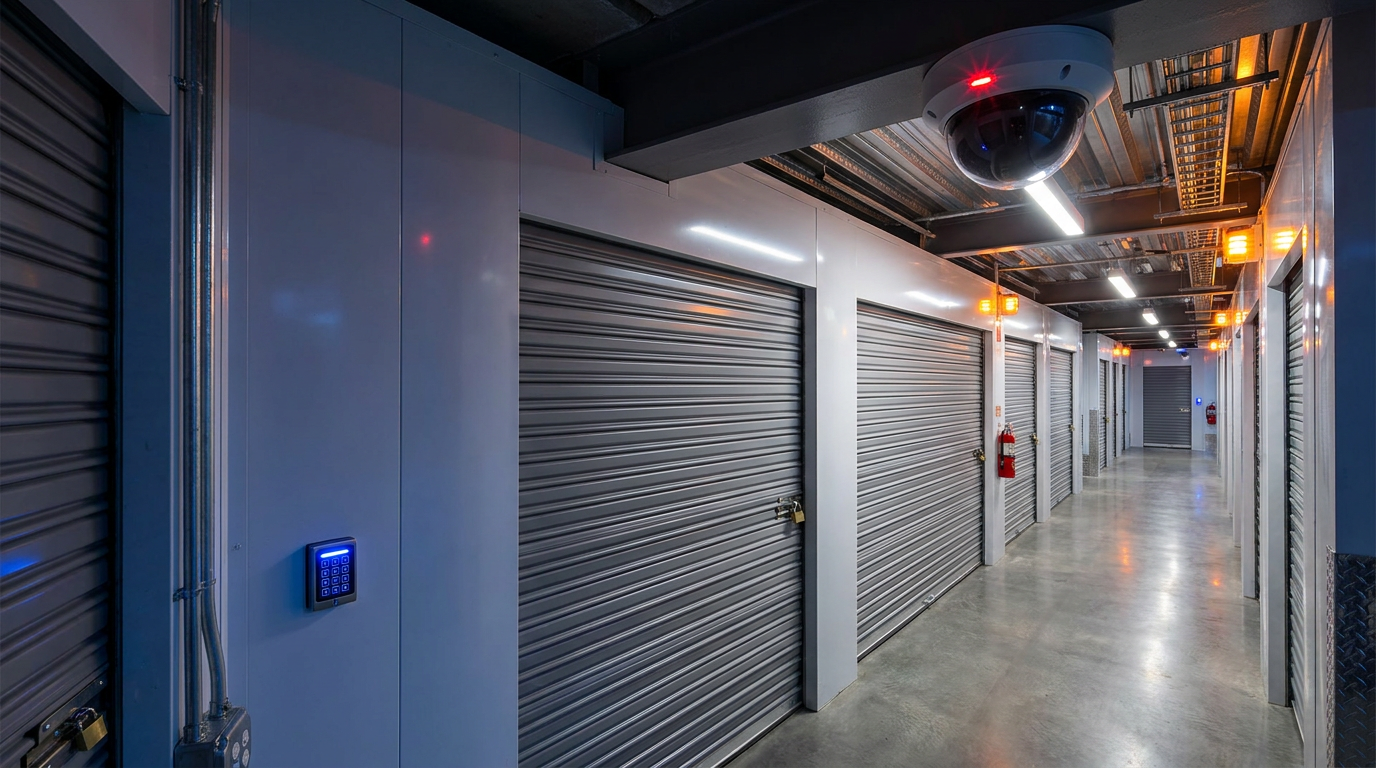
Beyond unit size, consider facility features that affect convenience and security. Drive-up access eliminates hallways and elevators, simplifying loading of heavy items. 24/7 access allows flexible scheduling for busy renters. Security features including video surveillance, gated entry, and individual unit alarms protect valuables.
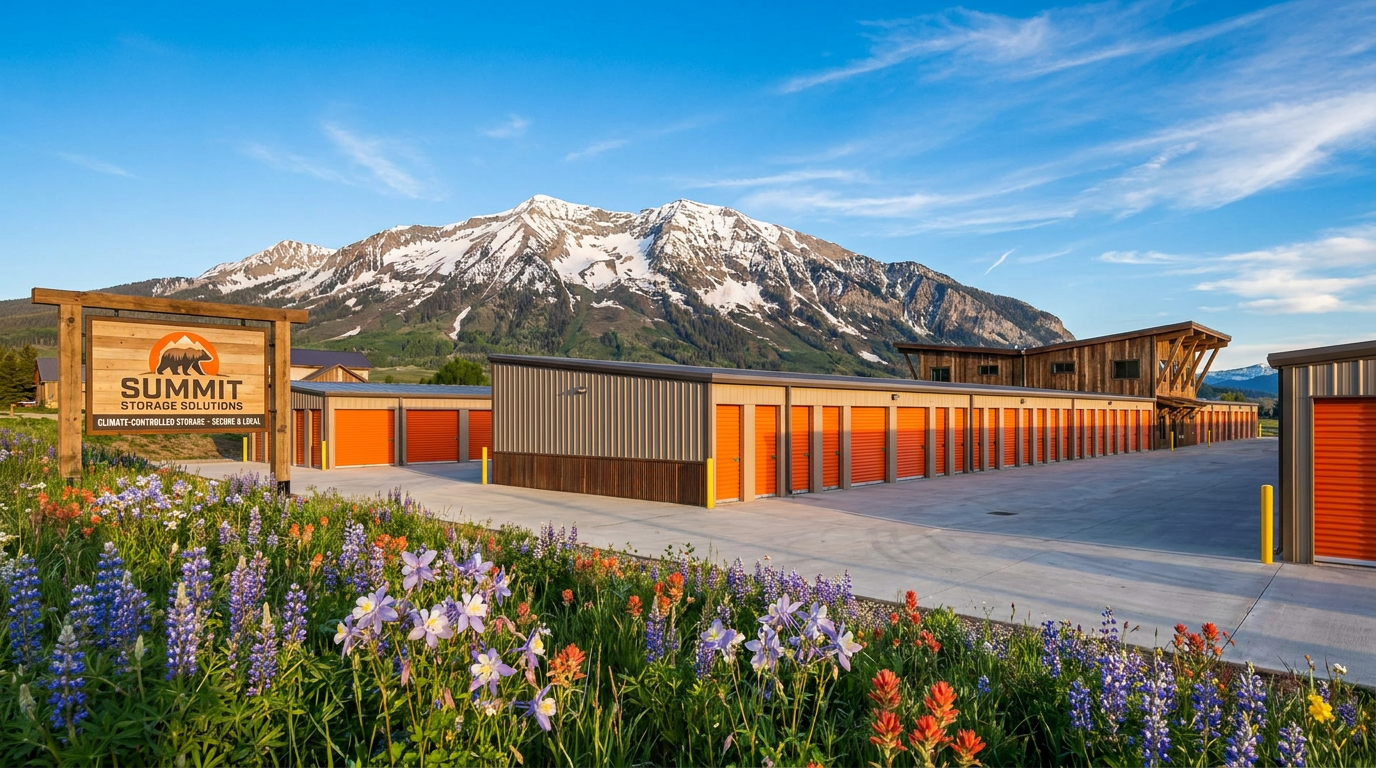
Locally owned facilities often provide more personalized service than national chains. Staff familiar with community needs can recommend appropriate sizes for local storage challenges, whether storing ski equipment through summer or protecting vacation home furnishings during off-season months.
Month-to-month leasing offers flexibility for uncertain storage timelines. Avoid facilities requiring long-term contracts or charging hidden fees for access, insurance, or administrative costs. Transparent pricing helps budget accurately for storage expenses.
|